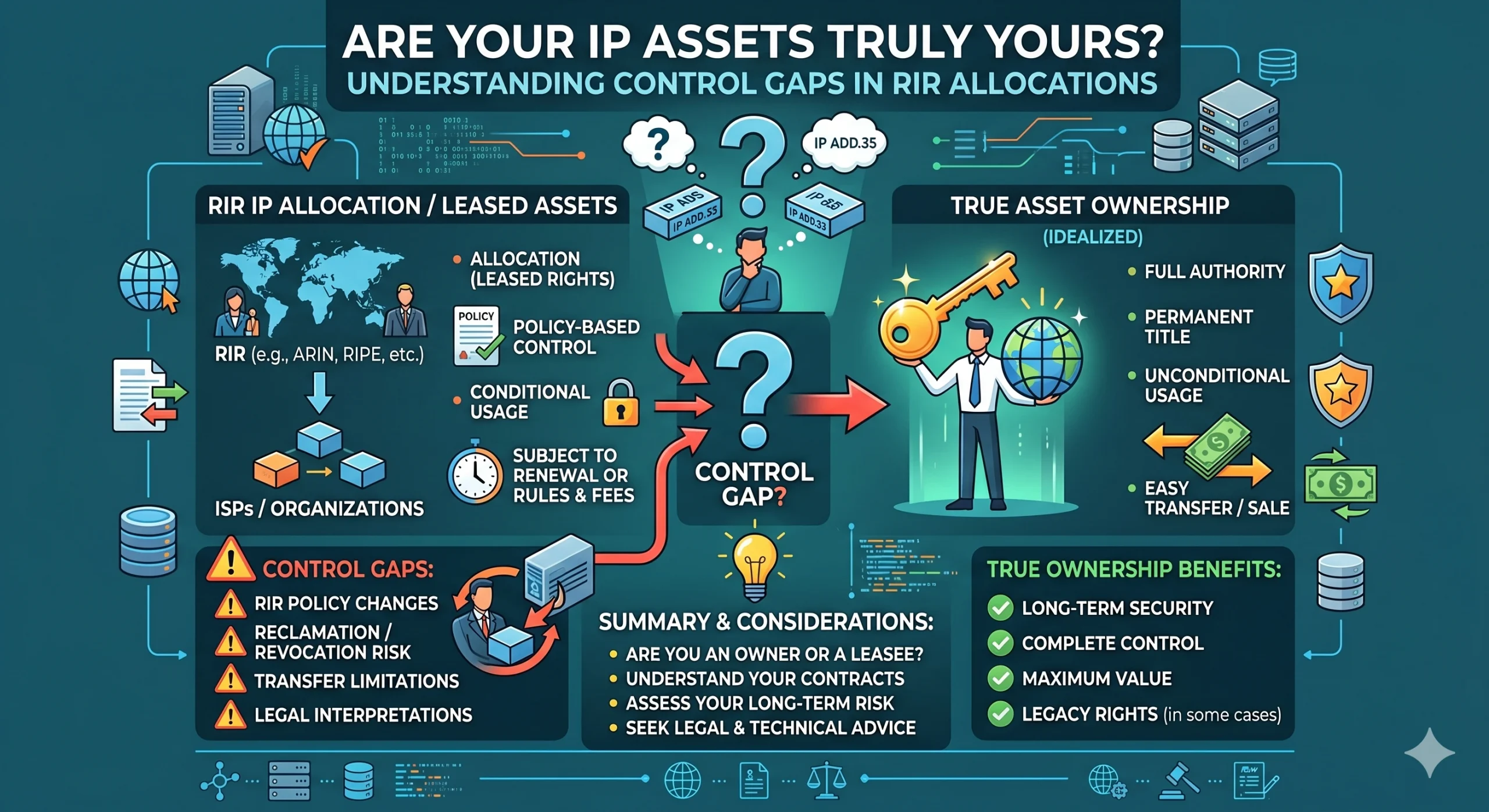
Are your IP assets truly yours? Understanding control gaps in RIR allocations
As IP addresses evolve into strategic digital assets, organisations are confronting hidden control asymmetries inside Internet allocation systems.
Modern IP Asset risk increasingly stems from registry-layer authority, validation systems and continuity dependencies rather than routing visibility alone.
RIR allocations provide operational recognition, but not necessarily perpetual, exclusive or autonomous control over IP addresses.
IP addresses have become strategic infrastructure asset
IP addresses were once treated as background infrastructure — technical resources managed quietly inside networking teams with little commercial attention.
That era has ended.
The exhaustion of IPv4 space transformed Internet number resources into scarce digital assets with measurable economic value. Enterprises now acquire, lease and transfer IPv4 blocks in increasingly sophisticated markets driven by cloud expansion, AI infrastructure growth and hyperscale connectivity demand.
As valuations increased, organisations began treating IP addresses as long-term infrastructure assets similar to spectrum, fibre or data centre capacity.
But the Internet’s allocation architecture was never originally designed around conventional ownership assumptions.
That distinction is now becoming operationally significant.
Many enterprises believe that if:
they purchased address space,
appear in registry records,
and actively route the prefixes,
then durable control naturally follows.
Increasingly, that assumption is being challenged.
Modern Internet governance systems separate operational usage from several deeper layers of authority, recognition and validation. As routing security frameworks mature, organisations are discovering that visible possession of IP addresses does not always translate into independent or perpetual control.
The result is a growing awareness of what many operators now describe as a control gap inside RIR allocations.
RIR allocations were built around stewardship, not sovereign ownership
One of the most misunderstood aspects of Internet infrastructure is the nature of IP address allocation itself.
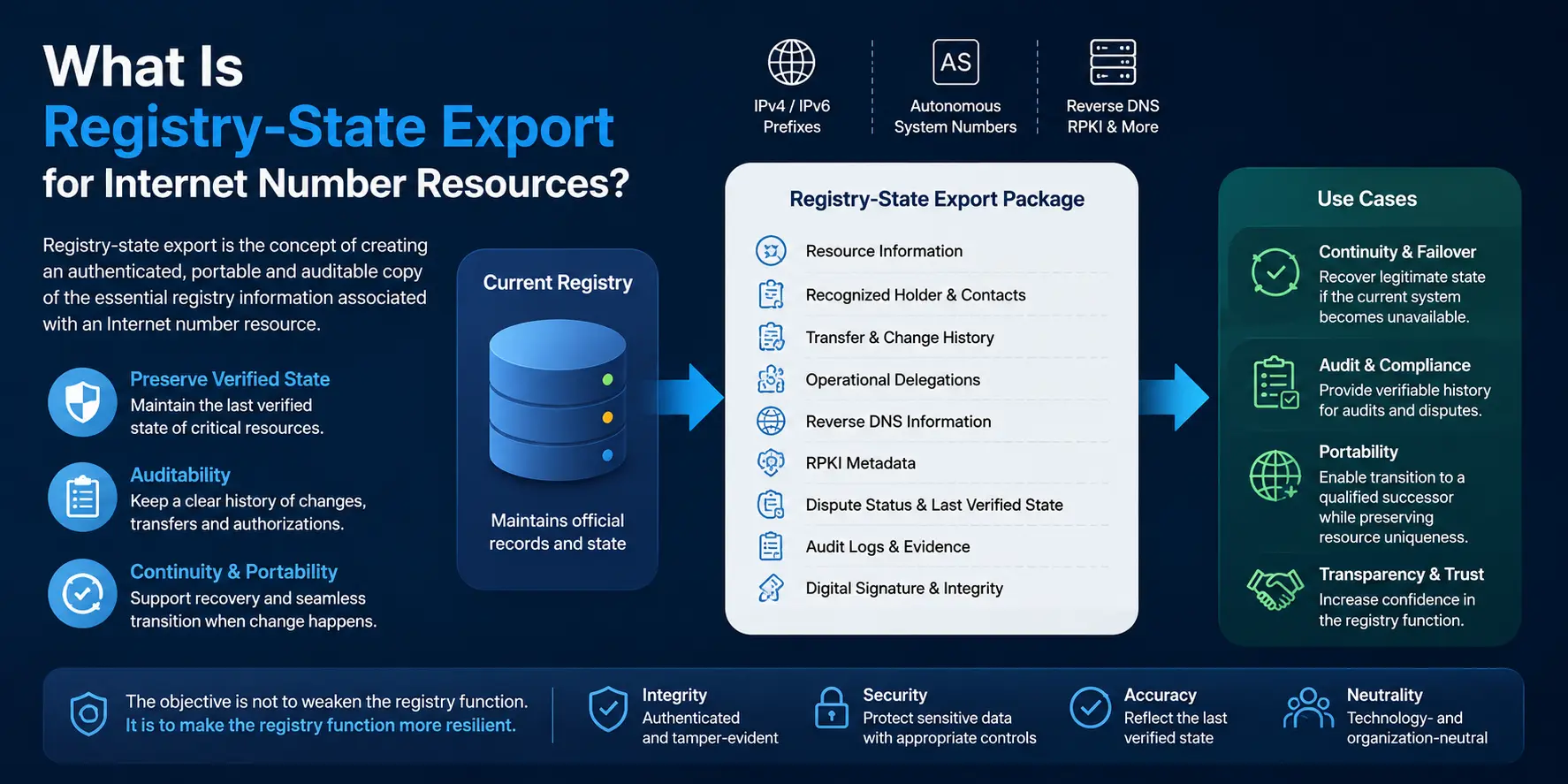
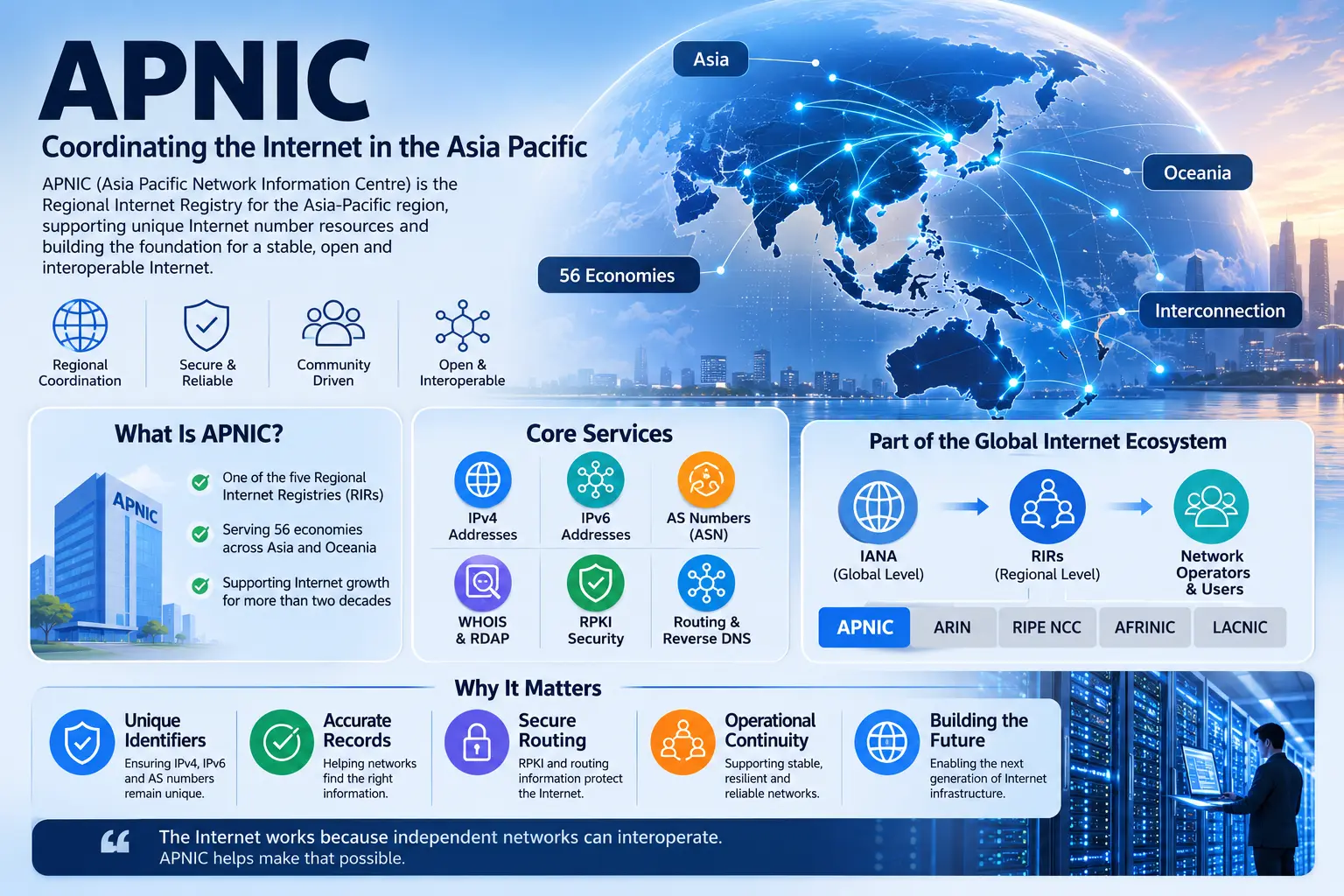
Regional Internet Registries (RIRs) — including RIPE NCC, ARIN and APNIC — administer Internet number resources through stewardship frameworks, policy systems and registry governance processes.
These systems coordinate global uniqueness and operational stability across the Internet.
But they do not function like traditional sovereign property registries.
This matters because many modern commercial assumptions surrounding IP Assets implicitly treat allocations as though they create fully autonomous ownership rights.
In practice, allocation frameworks were designed primarily to support:
coordination,
uniqueness,
routability,
policy enforcement,
and operational trust continuity.
The architecture prioritised Internet stability rather than independent infrastructure sovereignty.
For years, this distinction received little attention because routing legitimacy depended mostly on network behaviour itself. If a prefix was globally reachable and operationally stable, most organisations assumed effective control existed.
That assumption becomes more complicated once trust systems move deeper into registry-linked validation mechanisms.
The real issue is not allocation — it is dependency on allocation authority
The central misunderstanding surrounding IP Assets is not whether organisations received legitimate allocations.
It is whether their operational authority can persist independently from the systems that recognise those allocations.
Those are very different questions.
Many enterprises assume that acquiring IP space creates durable infrastructure authority similar to owning physical assets. But Internet number resources remain structurally dependent on upstream recognition frameworks.
This creates a critical asymmetry:
An organisation may operationally use IP addresses for years while the legitimacy of that usage still depends on external registry-layer authority.
The practical consequence is that:
routing visibility,
commercial transfer documentation,
and operational deployment
do not necessarily equal autonomous control.
Instead, control increasingly depends on continued recognition by governance systems capable of validating operational legitimacy.
That distinction defines the modern control gap.
This creates a profound legal and operational imbalance. As noted in a recent analysis on CircleID regarding the “Sovereignty Inversion” of these systems:
“Across the RIR system, these bodies retain consequential powers over recognition, standing, continuity, revocation, and administrative status, while sharply limiting or pre-structured their own liability… That asymmetry is the core of the problem.”
The Internet’s control stack is becoming fragmented
Historically, organisations viewed Internet control through a relatively simple operational lens:
-
Can the network route traffic?
-
Are prefixes reachable?
-
Are services operational?
Today, the control model is becoming layered and fragmented.
The modern IP control stack increasingly includes separate forms of authority:
|
Layer |
Perceived enterprise control |
Actual dependency risk |
|
Routing layer |
Prefix announcements |
Validation legitimacy |
|
Registry layer |
WHOIS visibility |
Allocation recognition |
|
Security layer |
Network operations |
ROA issuance authority |
|
Commercial layer |
Lease or transfer rights |
Policy continuity |
|
Governance layer |
Asset permanence |
Registry recognition systems |
This fragmentation creates structural asymmetry inside modern Internet infrastructure.
An enterprise may fully control operational routing while still depending on external entities for:
-
RPKI validation authority;
-
registry account continuity;
-
delegated resource administration;
-
sponsoring LIR relationships;
-
or policy-recognised legitimacy.
Under normal conditions, these dependencies may remain invisible.
During disputes, transitions or security incidents, they become critically important.
RPKI is changing the meaning of operational legitimacy
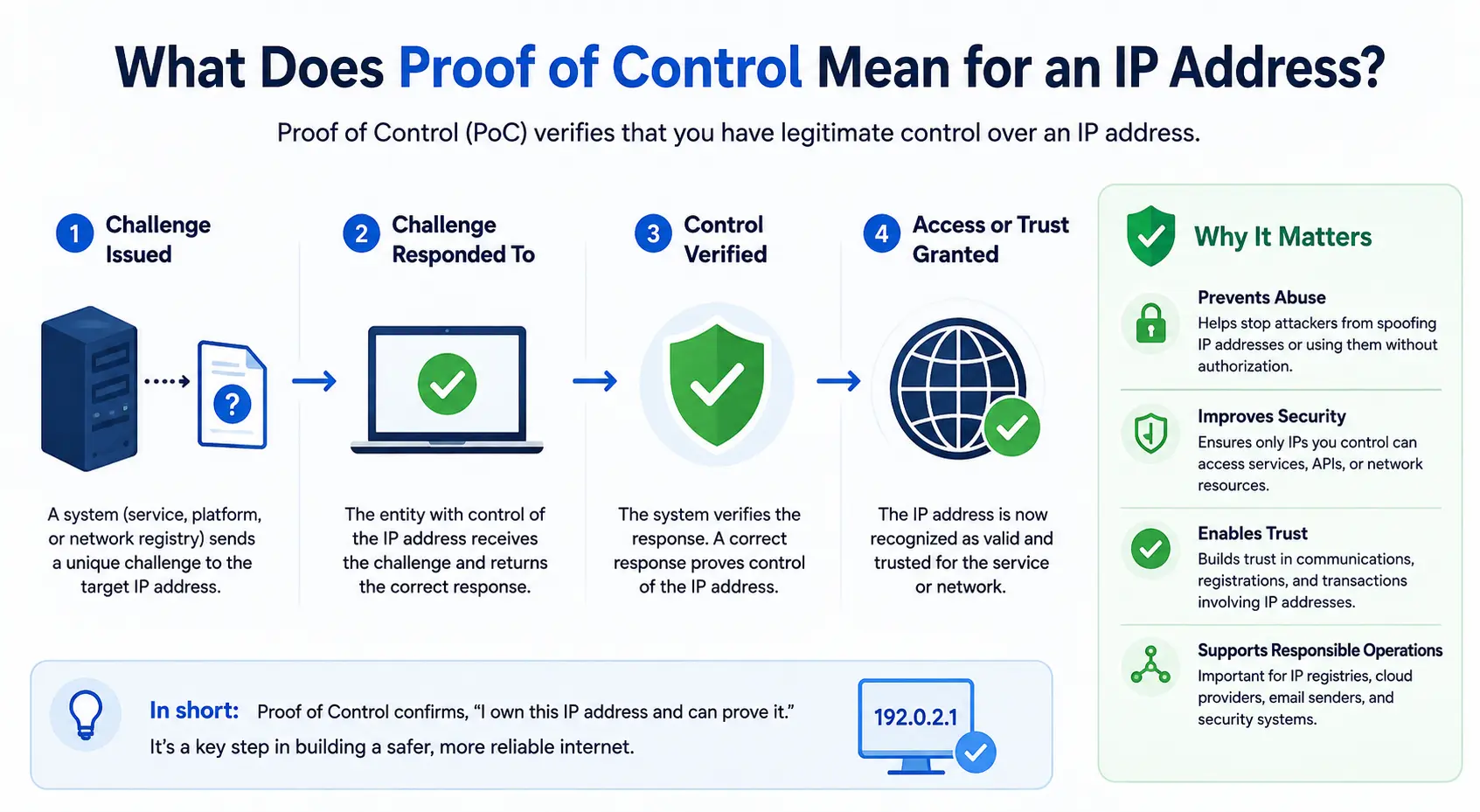
The rise of Resource Public Key Infrastructure (RPKI) represents one of the most important structural changes in Internet routing governance in decades.
RPKI improves routing security by allowing networks to cryptographically validate authorised route announcements. This helps reduce hijacking risks and improves trust across global routing systems.
From a security perspective, adoption is widely regarded as beneficial.
But RPKI also changes where operational authority ultimately resides.
Historically, routing legitimacy emerged largely from operational network behaviour and peering relationships. Under RPKI, legitimacy increasingly depends on cryptographic validation chains linked to registry-recognised authority.
This subtly but fundamentally shifts the Internet’s trust model.
The key operational question becomes:
Who controls the ability to validate routing legitimacy?
In many environments, that authority may remain tied to upstream administrative systems rather than downstream operational users.
As a result, the practical centre of control moves away from visible usage and toward validation governance.
This is why registry continuity is becoming strategically important.
Leasing markets exposed a deeper structural problem
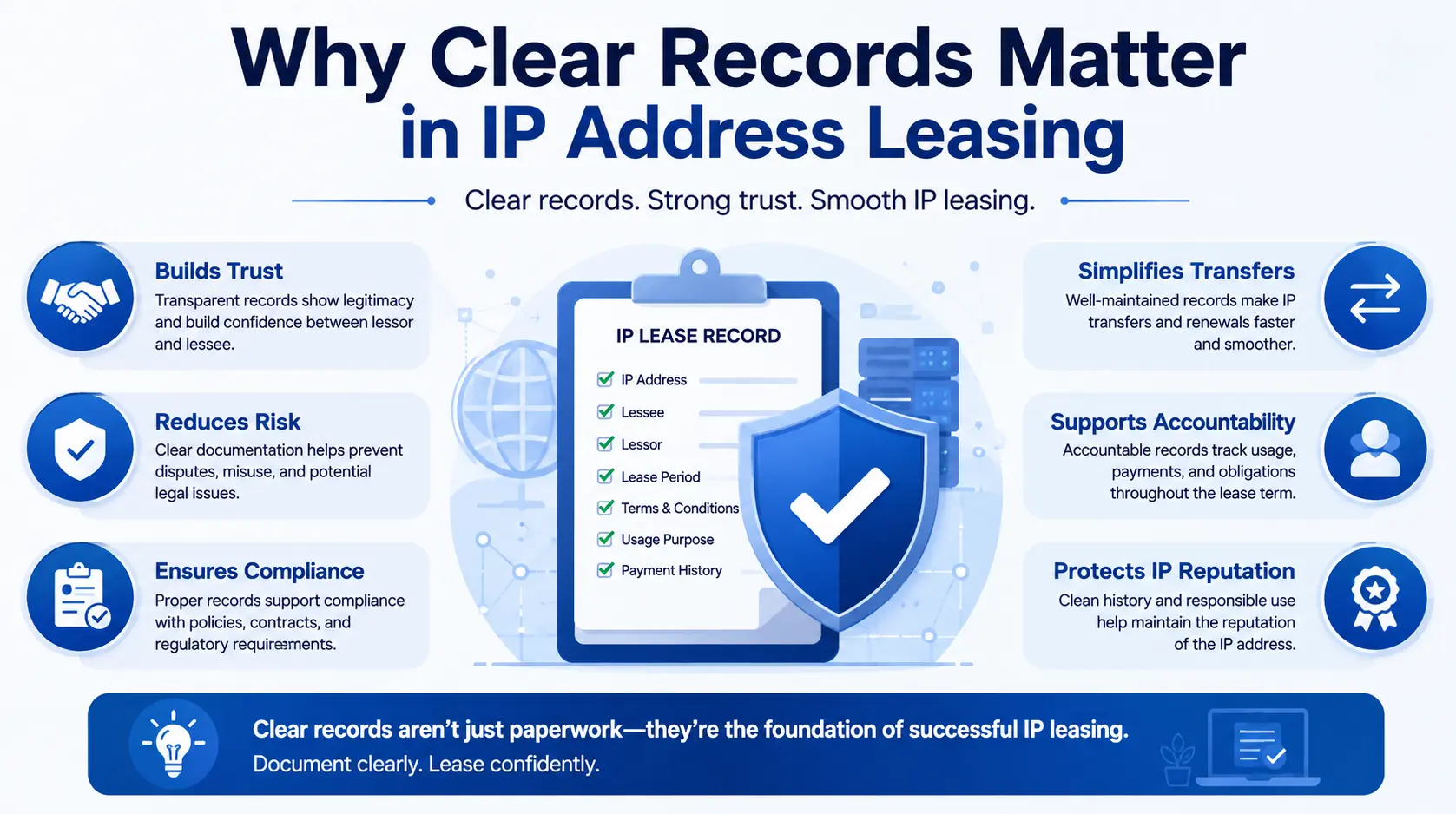
The rapid growth of IPv4 leasing accelerated awareness of these asymmetries.
Leasing solved a real commercial problem by allowing organisations to access scarce address space without purchasing increasingly expensive IPv4 blocks outright.
But leasing also exposed how separable operational use and allocation authority had always been.
A company can:
deploy infrastructure,
serve customers,
build routing policy,
and operate globally on leased space,
while still depending on another entity for underlying registry continuity and validation authority.
This creates a form of infrastructural dependency that resembles long-term operational tenancy more than fully autonomous ownership.
As long as relationships remain stable, the distinction may appear unimportant.
But continuity stress reveals the underlying architecture.
The core issue is not that leasing introduces entirely new risks.
It is that leasing makes existing allocation asymmetries impossible to ignore.
Registry continuity risk exists even when routing appears stable
One of the most misunderstood realities in Internet governance is that routing visibility alone does not prove durable control.
A prefix may remain globally routable while underlying authority becomes fragmented, disputed or externally dependent.
This is why registry continuity risk matters.
Continuity risk concerns whether organisations can sustainably maintain recognised operational legitimacy across:
registry systems,
validation frameworks,
transfer recognition,
account administration,
and governance transitions.
Importantly, these dependencies often sit outside ordinary network operations.
The risk is not necessarily immediate route loss.
The deeper issue is survivability when governance conditions change.
Many infrastructure systems appear stable precisely because continuity assumptions have not yet been tested.
That distinction is increasingly important as routing security frameworks become more tightly integrated with registry-recognised validation systems.
Legacy IPv4 resources complicate the picture further
Legacy IPv4 allocations introduce additional ambiguity because many were distributed before modern governance structures fully evolved.
Historical assumptions about stewardship, operational legitimacy and transferability do not always align cleanly with today’s registry-linked trust systems.
In some cases:
historical records are incomplete;
administrative contacts are outdated;
transfer chains are difficult to verify;
sponsorship structures evolved informally.
As these older resources entered commercial markets, organisations often applied modern asset assumptions to systems originally designed around cooperative stewardship principles.
This created a widening disconnect between:
perceived asset permanence,
and structurally recognised authority.
The Internet’s governance architecture did not originally anticipate IPv4 becoming a globally traded infrastructure commodity.
Yet modern markets increasingly behave as though fully sovereign ownership already exists.
That tension sits at the centre of today’s control gap debate.
Cybersecurity risks now extend into registry governance systems
The growing importance of registry-linked authority also expands the Internet’s operational attack surface.
Administrative access to RIR accounts, validation systems and delegated authority mechanisms now carries strategic significance far beyond simple record management.
Compromised registry credentials may potentially affect:
resource administration;
routing authorisations;
validation states;
delegation continuity;
and operational legitimacy.
This changes how infrastructure security must be understood.
Protecting routers and transit links is no longer sufficient if upstream governance systems remain operationally vulnerable.
As trust becomes increasingly cryptographically anchored, administrative continuity itself becomes part of infrastructure security.
IP Asset governance is moving beyond engineering teams
The changing structure of Internet trust is transforming IP Asset governance into a broader organisational issue.
What was once considered a purely technical responsibility increasingly intersects with:
legal governance;
operational resilience;
compliance;
cybersecurity;
procurement;
and executive risk management.
Enterprises now need visibility into questions such as:
Who controls registry-layer authority?
Who can issue or revoke ROAs?
Which dependencies exist upstream?
Can operational legitimacy survive administrative disruption?
Are leasing arrangements aligned with continuity expectations?
Does the organisation possess durable control, or merely recognised usage?
These are no longer abstract governance questions.
They increasingly shape operational resilience itself.
The future of IP Assets may depend on trust persistence, not possession
The Internet’s allocation architecture was built to coordinate global interoperability, not to create sovereign infrastructure ownership systems.
For decades, that distinction remained largely invisible.
Today, scarcity, commercialisation and routing validation frameworks are forcing organisations to confront it directly.
The modern Internet increasingly operates through layered systems of:
recognition,
validation,
continuity,
and administrative trust.
As a result, the strategic meaning of IP Asset control is changing.
The question is no longer simply:
“Who uses the IP addresses?”
It is increasingly:
“Who controls the systems capable of sustaining recognised legitimacy over time?”
That is the deeper issue inside modern RIR allocations.
And it may ultimately define how Internet infrastructure governance evolves over the next decade.
FAQs
An IP Asset refers to Internet number resources such as IPv4 addresses, IPv6 addresses and Autonomous System Numbers used for Internet routing and infrastructure operations.
RIR allocations provide recognised operational stewardship and administrative authority under policy frameworks, but not necessarily sovereign or perpetual ownership in the traditional property sense.
A control gap refers to the separation between visible operational use of IP addresses and the deeper systems that maintain recognised legitimacy, validation and continuity authority.
RPKI shifts routing trust toward cryptographic validation systems linked to registry-recognised authority, making validation governance increasingly important for operational legitimacy.
Leased IP space can separate operational deployment from underlying allocation authority, creating continuity dependencies on upstream registry-linked governance systems.