Preparing for an Unexpected Change in Registry Records
An unexpected change in an IP registry record should be treated as a potential continuity and security event, even when network services appear unaffected.
The appropriate first steps are to:
– Preserve evidence of the previous and current records
– Verify the change through authoritative sources
– Check whether routing, RPKI, IRR, or reverse DNS has also changed
– Secure every account associated with the resource
– Contact the relevant Regional Internet Registry
– Notify the organization’s network, security, legal, and management teams
– Maintain a documented timeline until the issue is resolved
Not every unexpected change indicates misconduct. Changes may result from administrative corrections, automated updates, policy implementation, incomplete transfer processes, corporate restructuring, human error, or account compromise.
The important principle is simple: registry data supports valuable operational infrastructure, so unexpected changes deserve prompt, organized review.
Why registry records matter
Registry records are often treated as background administration. Once an IPv4 block, IPv6 allocation, or Autonomous System Number is in service, the organization’s attention usually shifts toward routing, customers, security, and network growth.
However, registry information remains part of the infrastructure surrounding those resources.
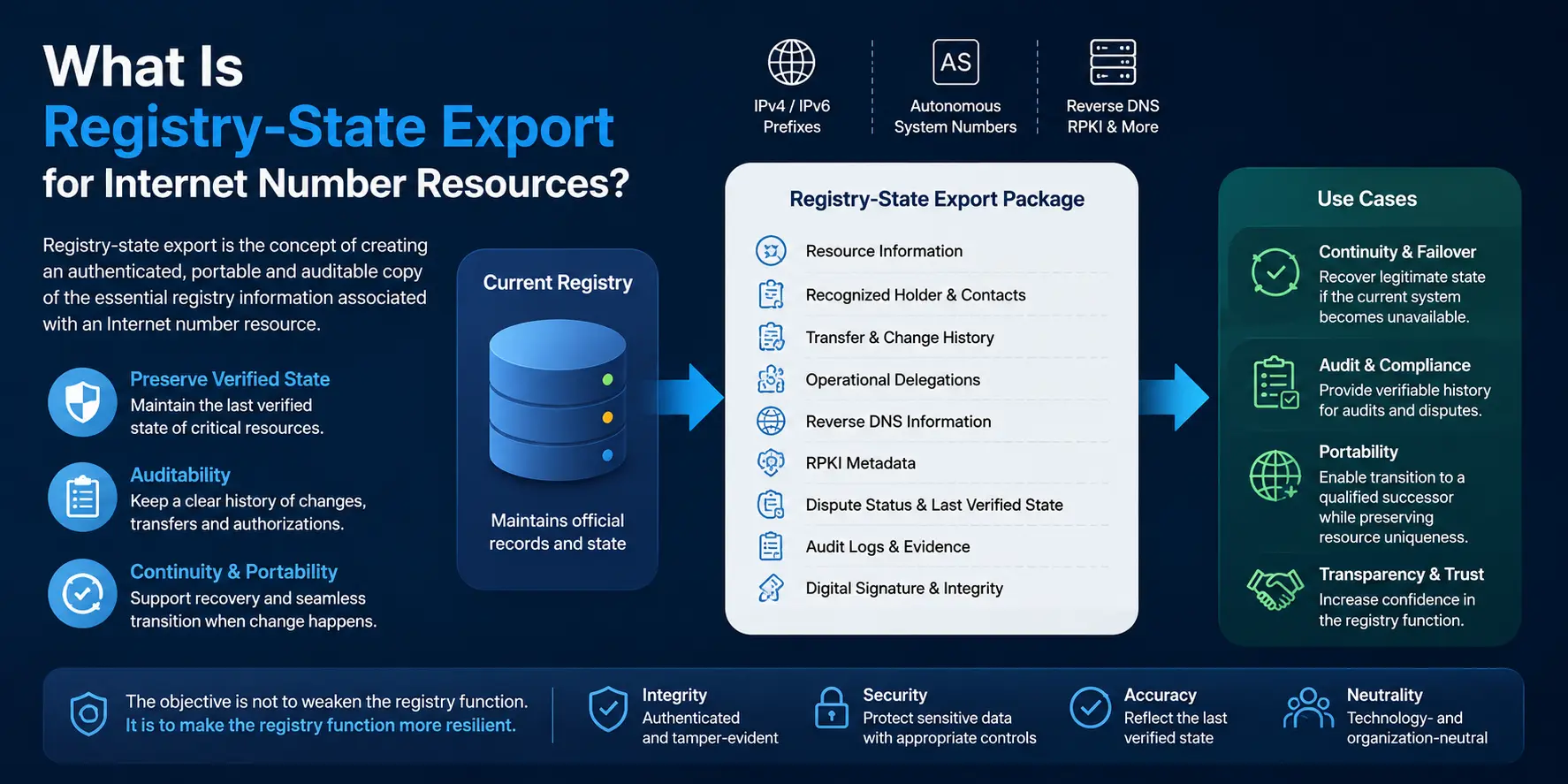
It may help identify:
– The organization associated with an IP address block
– Administrative, technical, and abuse contacts
– Resource status and registration history
– The relevant Regional Internet Registry
– Reverse-DNS authority
– Related routing information
– RPKI and resource-certification relationships
These records do not carry traffic themselves. A company’s routers, transit relationships, customers, and operational systems create the actual network service.
Nevertheless, registry information can affect how registries, transit providers, buyers, lessors, security teams, and other counterparties understand control and authorization.
The record is not the whole asset, but it is an important representation of the resource.
This relationship has become more significant as IPv4 addresses have developed economic and operational value. IPv4 resources are now transferred, leased, financed, routed across multiple regions, and used to support cloud platforms, hosting services, telecommunications networks, SaaS products, and enterprise infrastructure.
Heng.lu has previously examined this relationship in [Why the Registry Layer Is a Structural Risk](https://heng.lu/on-why-the-registry-layer-is-a-structural-risk-and-why-larus-is-the-only-proven-business-continuity-guarantor/). The central idea is that organizations should not view registry administration as separate from business continuity. Registry relationships, policy requirements, account access, documentation, routing authorization, and renewal obligations form part of the overall risk environment.
What is an unexpected registry-record change?
An unexpected registry change is an alteration to authoritative or operational resource information that:
1. Was not requested through the organization’s approved process;
2. Cannot immediately be explained by a known registry action; or
3. Creates uncertainty about control, routing, authorization, or continued use.
Examples include:
A change to the registered organization
The organization name associated with an IP block changes, is abbreviated incorrectly, or is replaced by another legal entity.
This can sometimes result from a legitimate merger, transfer, corporate-name update, or registry correction. It should still be verified against internal records.
Replacement of administrative contacts
A known administrative, technical, or abuse contact is replaced by an unfamiliar person or email address.
This may be a routine cleanup, but it can also indicate outdated account management or unauthorized access.
A change in resource status
A block appears under a new status or is marked in a way the resource holder did not expect.
The meaning of status fields differs among registries, so the organization should request clarification before drawing conclusions.
An unexpected IRR modification
An Internet Routing Registry route object is deleted or changed, or a different origin ASN appears.
Some networks use IRR information to build routing filters. Incorrect information can therefore contribute to routing acceptance or reachability problems.
An RPKI or ROA change
A Route Origin Authorization disappears, names a different ASN, or permits an unexpected prefix length.
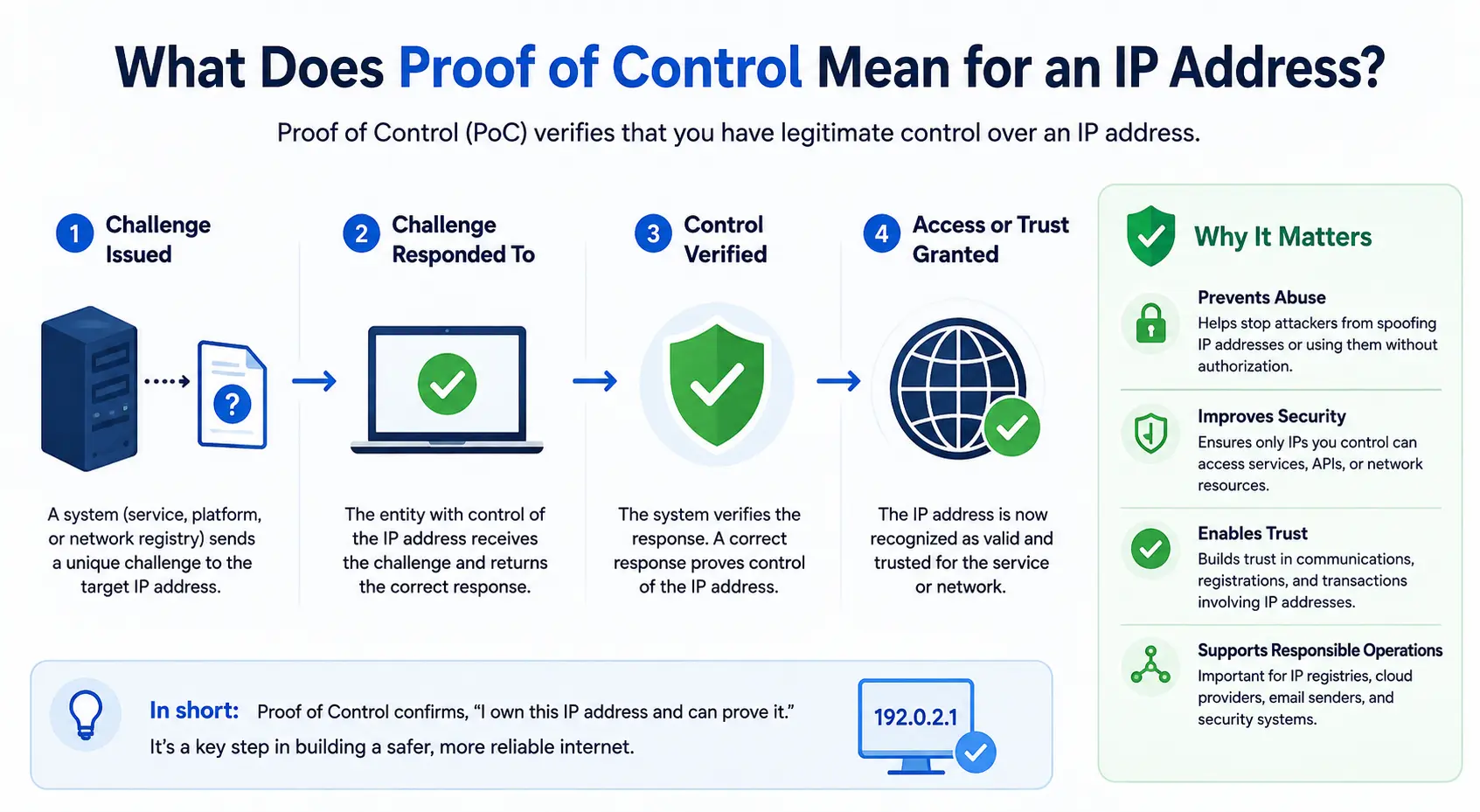
A ROA allows an address-space holder to authorize an Autonomous System to originate specified prefixes. The current technical profile is defined in [IETF RFC 9582](https://www.ietf.org/rfc/rfc9582.html).
A reverse-DNS delegation change
The nameservers responsible for reverse DNS are altered without an approved request.
This may affect email systems, logging, authentication, security controls, and services that depend on PTR records.
Loss of registry-account access
Public records may remain unchanged while the organization loses access to the portal required to manage them.
Loss of administrative control should be investigated promptly, even when routing continues normally.
A registry change does not always cause an immediate outage
Registry records and Internet routing are connected, but they are not the same system.
BGP distributes network reachability information. A routine change to an administrative address in RDAP or WHOIS does not automatically withdraw a route. Similarly, a route may remain visible even when a registry record is incomplete, outdated, or disputed.
However, registry information can influence systems surrounding routing:
– Transit providers may use IRR data to create filters.
– RPKI relies on a resource-certification hierarchy.
– A registry account may control the creation of certain records or authorizations.
– Counterparties may require registry evidence before accepting a transfer or lease.
– Reverse-DNS services may depend on registry delegation.
– Prolonged administrative uncertainty may complicate future changes.
The absence of an immediate outage should not be mistaken for confirmation that nothing is wrong.
An unexpected administrative change may remain unnoticed operationally until a routing update, transfer request, renewal, compliance review, or customer deployment requires the affected information.
The Heng.lu article What Happens to Routing if Registry Data Becomes Invalid? explores how inconsistent IRR and RPKI information can produce different results across networks. Some operators may continue accepting a route while others reject it, creating partial reachability rather than a complete outage.
What to do during the first hour
The initial response should focus on evidence, verification, security, and continuity.
1. Preserve the available evidence
Capture the current state before requesting or making corrections.
Preserve:
Official RDAP and WHOIS output
Registry portal screenshots
Account activity and audit logs
Email notifications
Support correspondence
IRR objects
ROA and RPKI status
BGP origin and visibility data
Reverse-DNS delegation
Internal change records
Relevant timestamps in UTC
Store copies outside the affected registry account. If access later becomes restricted, evidence retained only inside the portal may become unavailable.
RDAP is the modern protocol for accessing registration information. Its query format is defined in RFC 9082, while the response format is described in RFC 9083.
2. Confirm whether the change is authoritative
Third-party lookup services may use delayed, cached, or normalized data. An apparent change on one website may not reflect the current authoritative record.
Verify the information through:
The relevant RIR’s official RDAP or WHOIS service
The organization’s authenticated registry portal
Authoritative IRR sources
Multiple RPKI validators
BGP route collectors
Internal IP address management records
Earlier registry snapshots
The investigation should first establish whether the authoritative record changed or whether the difference is limited to a third-party data service.
3. Determine what is affected
Separate the event into four areas.
Administrative impact
Can the organization still access the registry account?
Are authorized contacts still present?
Can account information be updated?
Are recovery channels correct?
Routing impact
Is the expected ASN still originating the prefix?
Has a new origin ASN appeared?
Is the route still visible across major networks?
Are more-specific routes being announced?
Security impact
Is there evidence of unauthorized account access?
Have credentials, API keys, or recovery details changed?
Has an unexpected ROA or route object appeared?
Commercial impact
Could the issue affect a transfer, lease, financing arrangement, or customer commitment?
Are any counterparties relying on the previous record?
Is a scheduled deployment at risk?
A contact change may have limited immediate routing impact but still represent an important account-security issue. An incorrect ROA may have a more direct effect on reachability.
4. Secure connected accounts
If unauthorized access is possible:
Reset registry-account credentials
Revoke active sessions
Review all account users
Rotate API keys
Enable phishing-resistant multifactor authentication
Verify recovery email addresses and phone numbers
Secure the associated corporate email accounts
Review domain and DNS administration
Preserve logs before removing access
Registry access may depend on corporate email, external consultants, former employees, or shared administrative systems. The review should therefore extend beyond the registry portal.
5. Contact the relevant RIR
Open a formal support or security case through the registry’s official channel.
The notice should include:
The affected resource
A factual description of the change
The time it was discovered
The last known correct state
Available evidence
Any operational impact
The requested action or clarification
Authorized response contacts
The message should remain clear and neutral. The cause may not yet be known, and early assumptions can make resolution more difficult.
Request a case number and maintain a complete record of all correspondence.
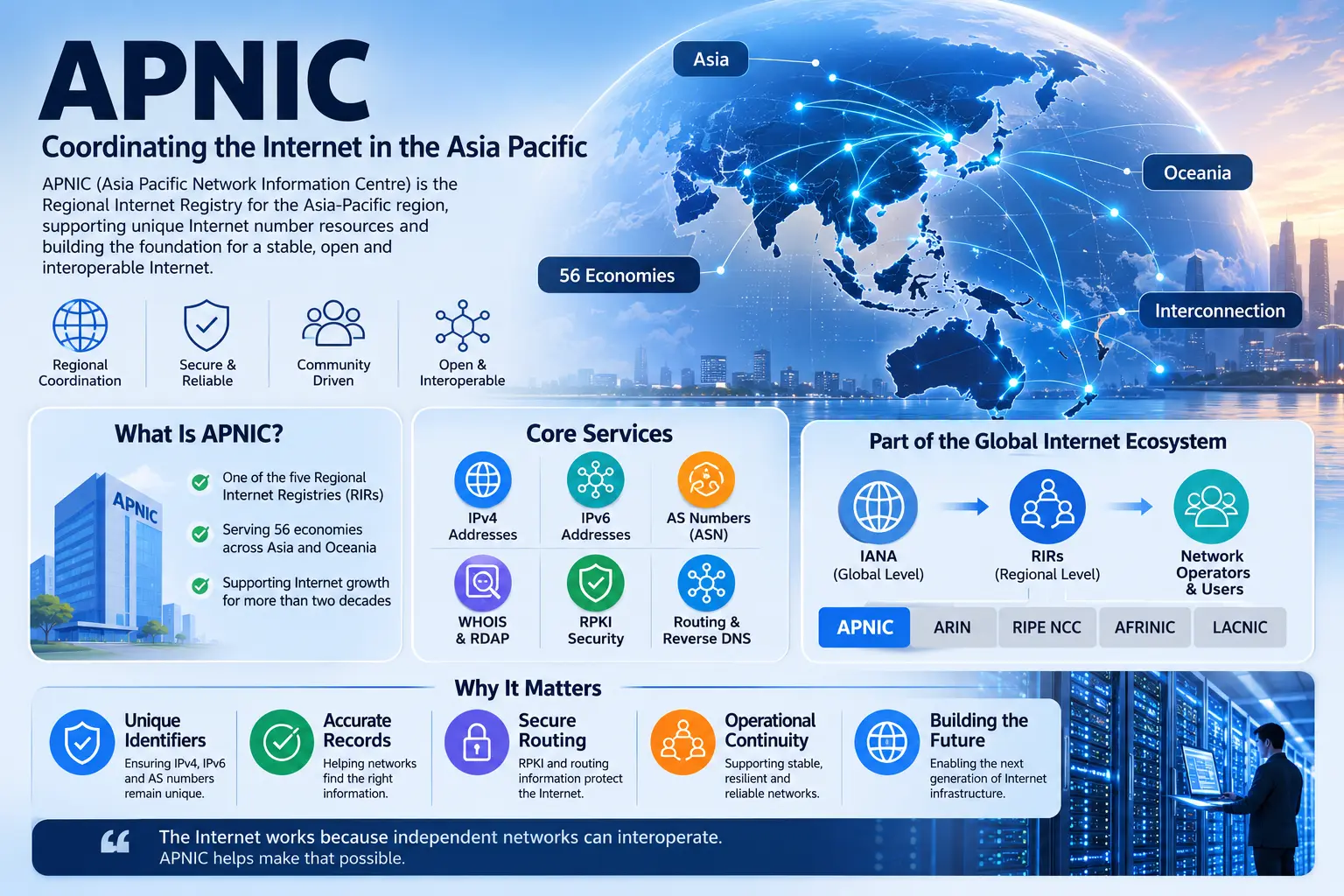
Official information and service channels are available from the five Regional Internet Registries:
6. Notify the appropriate internal teams
Registry-record incidents can involve more than network engineering.
Relevant participants may include:
Network operations
Information security
Legal counsel
Compliance
Finance
Corporate administration
Customer support
Executive management
A designated incident owner should coordinate the response and maintain a single timeline. This prevents multiple teams from sending inconsistent instructions or making overlapping changes.
Actions for the first 24 hours
Once the initial evidence is secured and the registry has been contacted, the organization should build a clear picture of the event.
Establish a known-good baseline
Compare the current information with:
Previous RDAP and WHOIS snapshots
Original allocation documents
Transfer approvals
Registry agreements
Corporate records
Merger or acquisition documents
Membership invoices
Historical IRR objects
Previous ROAs
Earlier routing data
Internal asset registers
The baseline helps determine whether the issue is an isolated data error, an incomplete administrative update, an account-security event, or a disagreement requiring further review.
Validate live routing
Check the affected prefixes from multiple external perspectives.
Confirm:
The expected origin ASN
Global BGP visibility
Route Origin Validation status
Unexpected more-specific routes
Changes in transit acceptance
Regional reachability
Traffic anomalies
Customer reports
A route may remain visible from one network while being rejected elsewhere. Monitoring from multiple regions is therefore preferable to checking only the organization’s upstream provider.
Limit unnecessary changes
During an uncertain event, unrelated changes can make investigation more difficult.
Pause nonessential modifications to:
Routing
ROAs
IRR objects
Reverse DNS
Registry contacts
Transfer requests
Corporate-account information
Security and continuity actions may still be necessary. Every emergency change should be approved and documented.
Prepare continuity options
Depending on the risk and operational importance of the resource, preparation may include:
Alternative transit arrangements
Temporary address capacity
DNS failover
Customer notification drafts
Allowlist-update procedures
Backup reverse-DNS plans
Workload-migration capacity
Contractual notices
Specialist legal advice
Preparing an alternative does not mean that the original resource will be abandoned. It ensures that customers and essential services are not entirely dependent on the outcome of an administrative review.
Building a registry-change readiness plan
The best response begins before any record changes.
Maintain an independent resource ledger
Every organization holding or using important Internet number resources should maintain its own controlled register.
It should include:
IPv4 and IPv6 prefixes
ASNs
Current RIR
Registry account identifiers
Registered legal entity
Administrative and technical contacts
Allocation and transfer history
Original agreements
Membership and payment status
IRR objects
Origin ASNs
ROAs and permitted prefix lengths
Reverse-DNS delegation
Active leases
Letters of Authority
Authorized users
Known restrictions or open cases
This internal ledger should be versioned, access-controlled, backed up, and reviewed regularly.
An independent record allows the organization to identify changes quickly and demonstrate its previous state without depending entirely on the affected platform.
Monitor authoritative data
Monitoring should cover more than the main organization field in WHOIS.
Useful monitoring targets include:
RDAP and WHOIS records
Administrative and technical contacts
IRR route objects
RPKI certificates and ROAs
Route Origin Validation
BGP origin changes
More-specific announcements
Reverse-DNS delegation
Registry-account users
Membership and renewal deadlines
Relevant RIR policy announcements
Alerts should state what changed, when it changed, and whether an approved internal request exists.
Strengthen access controls
Critical registry changes should require more than a shared password.
Recommended controls include:
Individual named accounts
Least-privilege access
Phishing-resistant multifactor authentication
Dual approval for sensitive changes
Formal change tickets
Out-of-band confirmation
Post-change verification
Immediate removal of former employees and vendors
Regular access reviews
The organization should document who may initiate, approve, and verify each category of change.
Keep corporate records aligned
Registry issues can arise when the legal organization has changed but the resource records have not.
Common examples include:
A corporate name change
A merger or acquisition
Movement of operations to a subsidiary
A change of registered address
Dissolution of an older entity
Loss of access to an old corporate domain
Departure of the original administrative contact
These gaps may remain unnoticed until the organization attempts a transfer, account recovery, or major update.
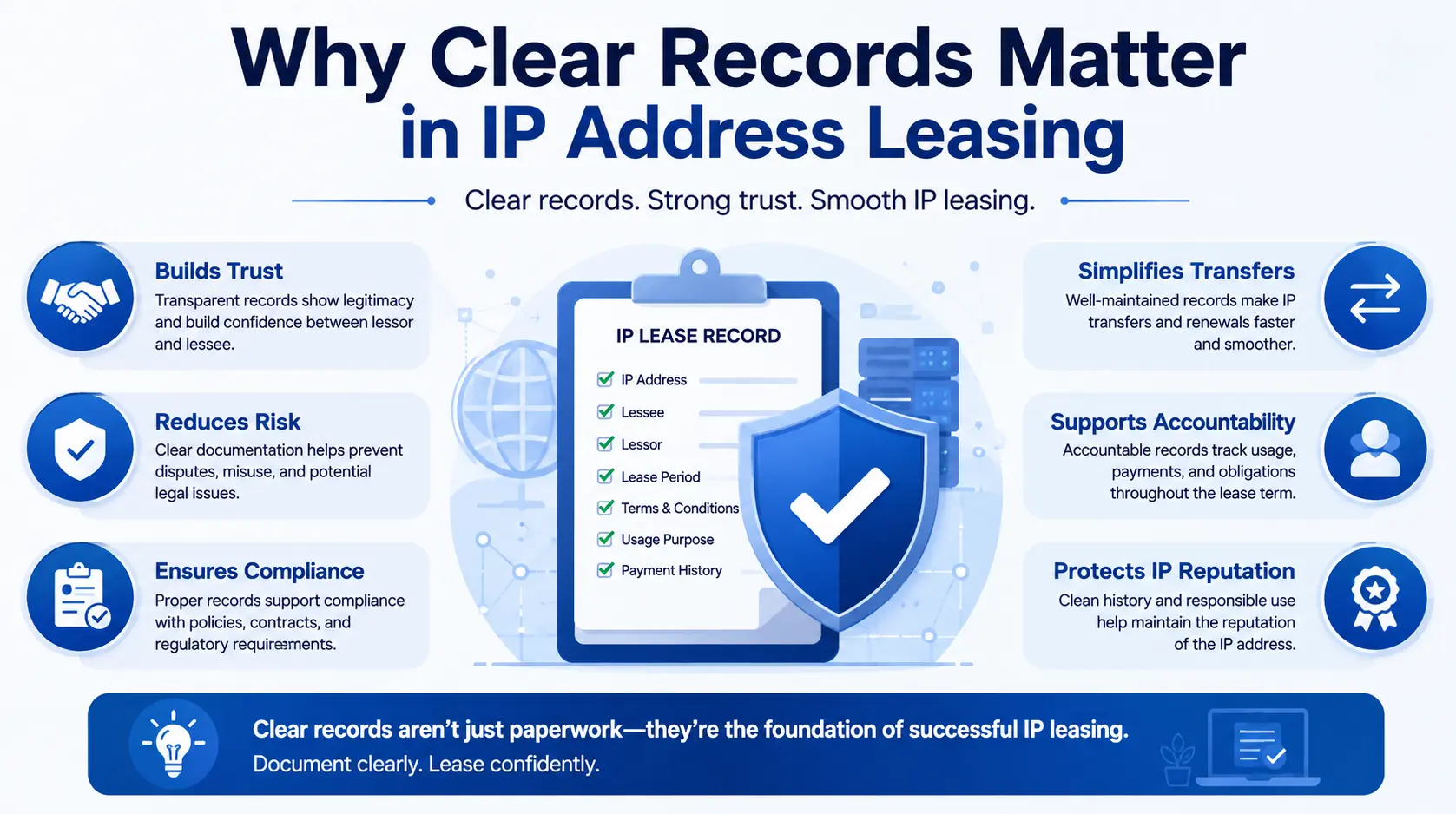
The analysis IP Address Asset Ownership Risks Enterprises Must Watch explains why registry recognition, legal ownership, operational control, and beneficial use may require supporting documentation rather than assumption.
Corporate housekeeping is therefore part of IP resource governance.
Monitor policy developments
RIR policies and operating procedures can change. Resource holders should follow announcements affecting:
Transfers
Membership
Registration services
RPKI
Legacy resources
Fees
Contact validation
Abuse management
Inter-RIR compatibility
Policy monitoring does not require treating every proposal as a threat. It allows the organization to understand new obligations, participate where appropriate, and adapt before a change affects operations.
Test the response plan
A written plan should be tested through periodic exercises.
Possible scenarios include:
An unfamiliar administrative contact appears
The organization loses portal access
A valid ROA is removed
An incorrect origin ASN is authorized
An IRR route object disappears
A transfer is recorded incorrectly
A membership or payment notice is missed
The exercise should test:
Evidence collection
Account recovery
Registry communication
Routing validation
Legal review
Executive decision-making
Customer communication
Continuity options
The aim is not to predict every possible event. It is to ensure that the organization can respond calmly when normal assumptions no longer apply.
Registry-change readiness checklist
Governance
Is each critical resource assigned to an accountable owner?
Is the registered legal entity correct?
Are corporate succession records complete?
Is there a designated incident coordinator?
Is registry risk included in continuity planning?
Security
Is strong multifactor authentication enabled?
Are registry users reviewed regularly?
Are recovery details current?
Are shared accounts prohibited?
Can third-party access be revoked quickly?
Evidence
Are registry snapshots retained independently?
Are allocation and transfer documents accessible?
Are leases and LOAs archived?
Are changes recorded with timestamps?
Are backups stored outside the registry portal?
Network operations
Are BGP origin changes monitored?
Are IRR objects checked?
Are ROAs monitored continuously?
Is reverse-DNS authority documented?
Are alternative capacity and routing options available?
Communication
Are official RIR support channels recorded?
Is specialist legal advice available if needed?
Are upstream escalation contacts current?
Is there a customer communication template?
Has the response plan been tested?
Protect the records and preserve continuity
Registry systems perform an essential coordination function. Accurate records support uniqueness, routing operations, transfers, security, and accountability.
At the same time, resilient infrastructure should not assume that any administrative system will remain permanently free from mistakes, delays, security incidents, policy changes, or disputes.
The practical response is not confrontation. It is preparation.
Organizations should maintain independent evidence, monitor critical records, secure administrative access, understand the relevant policies, and establish a cooperative escalation path with the appropriate registry.
The broader Heng.lu framework distinguishes between continuity of essential registry functions and dependence on any single administrative interface. The article The Registry Continuity Fallacy—Protect the Ledger, Not the Gatekeeper develops this distinction further.
Registry continuity requires reliable:
RDAP and WHOIS information
Resource history
RPKI
Reverse DNS
Transfer records
Dispute documentation
Operational coordination
Protecting those functions strengthens the Internet’s shared infrastructure.
Conclusion
An unexpected registry-record change may be harmless, correctable, or part of a legitimate administrative process. It may also reveal a security problem, outdated documentation, or a continuity risk.
The right response is neither panic nor neglect.
Preserve the evidence. Verify the authoritative state. Secure the account. Check routing and RPKI. Contact the registry. Coordinate internal teams. Prepare alternatives if critical services may be affected.
Most importantly, build these capabilities before they are needed.
IPv4 addresses, IPv6 resources, and ASNs support real customers and real businesses. The records surrounding them should therefore be governed with the same care applied to other critical infrastructure.
Preparation turns an unexpected change from a potential crisis into a manageable operational process.
FAQs
An IP registry record contains information associated with Internet number resources such as IPv4 addresses, IPv6 addresses, and Autonomous System Numbers. It may identify the registered organization, contacts, resource status, dates, and related administrative information.
The organization should preserve the previous and current records, verify the change through the relevant RIR, secure associated accounts, check routing and RPKI, and open a documented support case.
Some administrative changes have no immediate routing effect. Changes involving RPKI, IRR objects, routing authorization, or reverse DNS may have a more direct operational impact.
Both provide access to registration information. RDAP uses a standardized, structured, web-based protocol and is the modern successor to traditional WHOIS services.
A Route Origin Authorization is an RPKI object that identifies an ASN authorized to originate one or more IP prefixes. Networks can use this information when validating BGP route origins.