
Why IP Transfers Should Protect Accuracy, Not Police Commerce
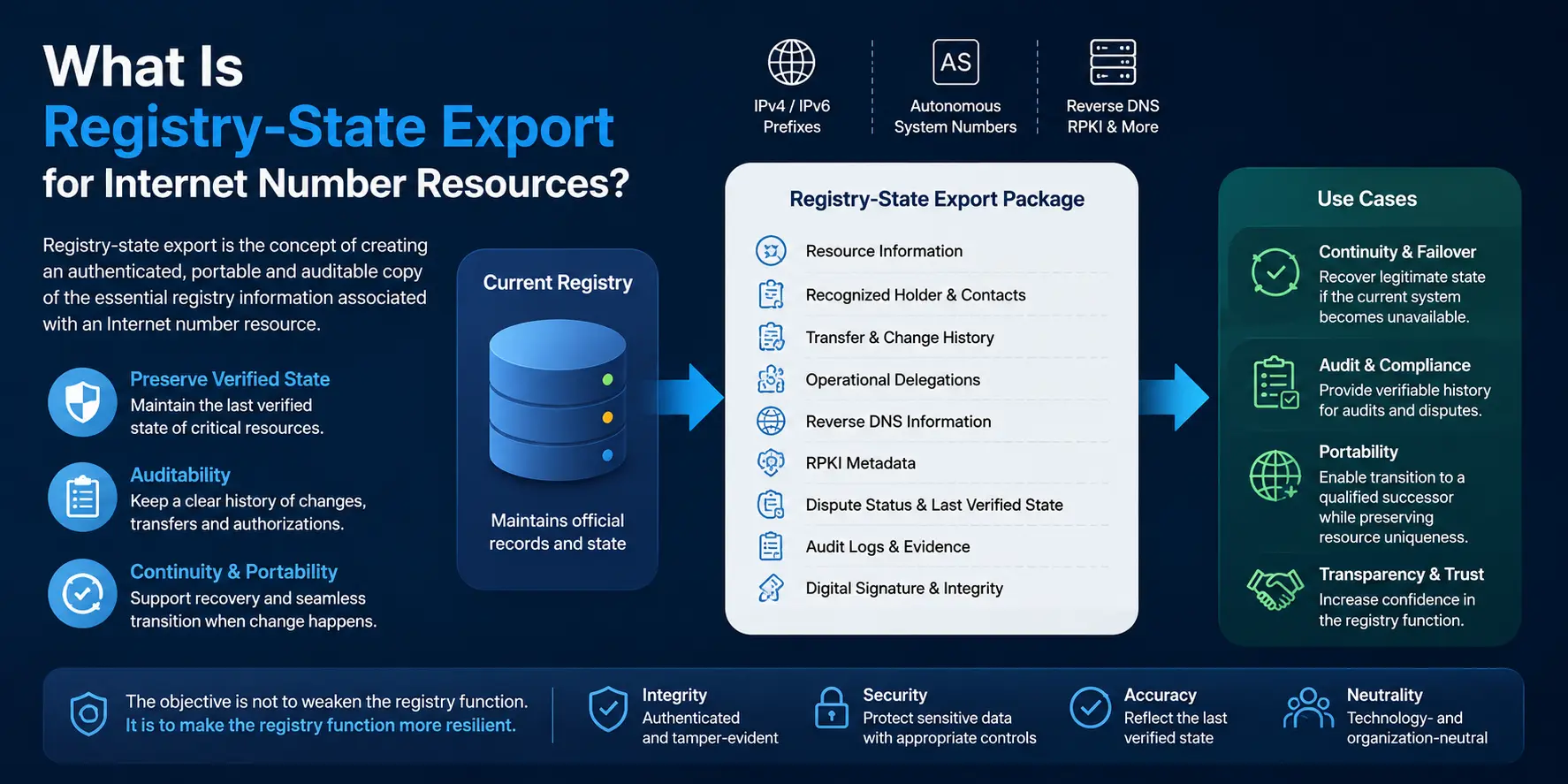
IP transfers should protect accuracy because the purpose of an IP address registry is to preserve uniqueness, maintain reliable records, and support operational continuity. A registry should verify who controls an Internet number resource and record that control accurately. It should not use the transfer process to judge prices, business models, geography, capital allocation, or commercial strategy.
An IP address transfer is a record-keeping event, not a commercial permission system.
That distinction is central to The Bill of Rights of Uniqueness Coordination: the registry may record, coordinate, and protect uniqueness, but it may not rule.
What Is an IP Transfer?
An IP transfer is the process by which the registered holder of an IP address block changes from one party to another. In practice, this usually means that an IPv4 address block is transferred between companies, network operators, or other entities that need address space for their infrastructure.
For a basic commercial and operational explanation of how transfers work, see LARUS’s guide, What is IP Address Transfer.
But the technical purpose of an IP transfer should remain narrow.
The registry should ask:
Is the IP address block unique?
Is the current holder correctly identified?
Is the recipient correctly identified?
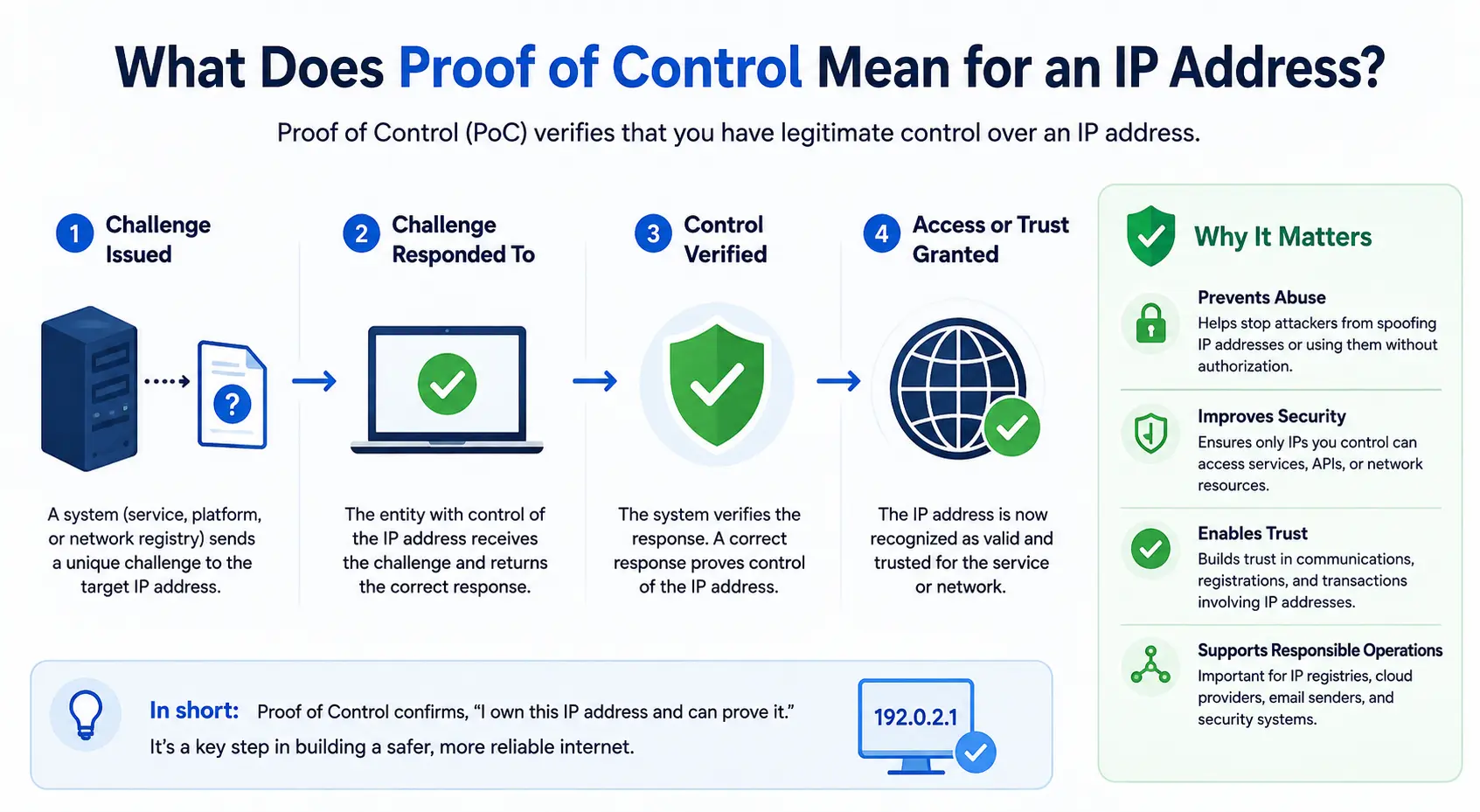
Is there evidence of authority to transfer?
Will the registry record accurately show the party responsible for the resource?
Are routing, abuse, and operational contacts clear?
These are legitimate registry questions.
They protect the Internet.
They protect operators.
They protect users.
They protect the accuracy of the shared ledger.
They do not require the registry to become a commercial regulator.
The Registry May Record, But It May Not Rule
A Regional Internet Registry exists because Internet number resources must be unique. Two networks cannot legitimately use the same globally routed IP address space at the same time. The registry function exists to prevent that conflict.
That function is technical, narrow, and necessary.
It does not make the registry the owner of all number resources in its database.
It does not make the registry a landlord.
It does not make the registry a market regulator.
It does not give the registry a mandate to decide which business models deserve address space.
A registry record describes operational responsibility. It should not become a tool for economic control.
This is why IP transfers should be treated as accuracy events. If a lawful and documented transfer has occurred, the registry should update the record so that the public database reflects operational reality.
A registry that refuses to record reality does not protect the Internet. It corrupts the map.
Accuracy Is the Public Good
The most important public interest in an IP transfer is registry accuracy.
Network operators rely on registry data for routing confidence, abuse handling, contact information, legal clarity, operational continuity, and responsibility assignment. When registry data is wrong, the Internet does not become safer. It becomes more opaque.
The danger is not that IP addresses move.
The danger is that IP addresses move while the official registry pretends they have not.
When transfer policy becomes slow, discretionary, ideological, or commercially intrusive, it does not stop economic activity. It pushes activity away from the official record.
That creates worse outcomes:
outdated WHOIS or registry information;
unclear operational responsibility;
hidden control arrangements;
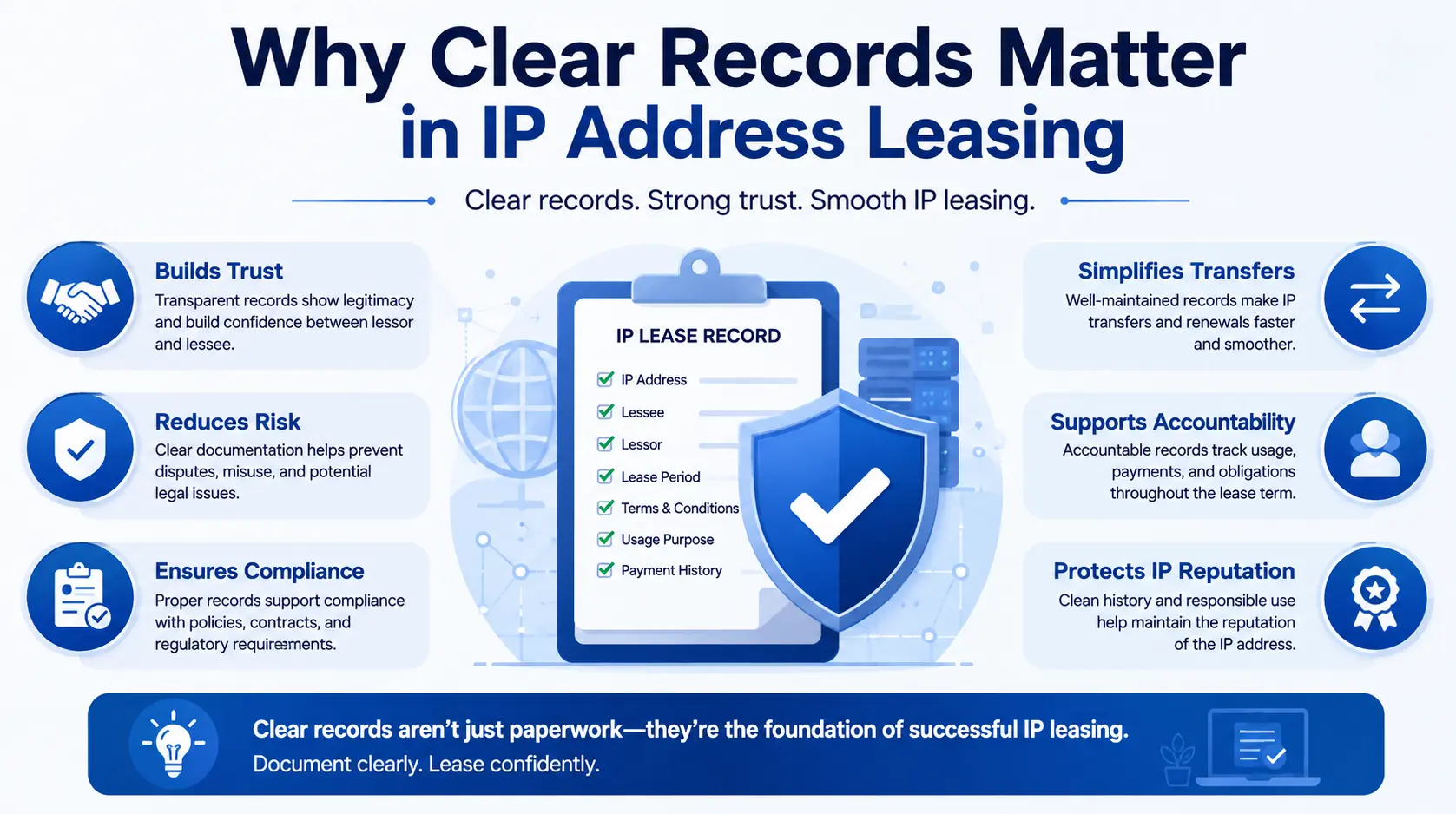
informal leasing chains;
harder abuse escalation;
delayed network deployment;
higher transaction risk;
unnecessary friction for businesses that need address space.
A good transfer system should make the accurate path easier than the inaccurate path.
That means clear documentation, predictable timelines, neutral verification, and a process focused on operational facts. LARUS’s article on best practices for IP address transfers in business operations is useful in this context: companies should manage transfers with documentation, planning, due diligence, and continuity controls.
But due diligence is not permission theater.
Verification protects the ledger.
Discretion controls the market.
The two should not be confused.
IPv4 Scarcity Does Not Turn Registries Into Landlords
IPv4 scarcity has made IP address transfers more important. As unused IPv4 space became harder to obtain through ordinary allocation, companies increasingly turned to the transfer market to support growth, cloud deployment, hosting, telecom expansion, enterprise networks, and other infrastructure needs.
That reality has made market data and transfer visibility more important. Resources such as IPv4 Transfer Statistics show why transfers are now part of the infrastructure economy.
But scarcity does not change the constitutional role of the registry.
The fact that IPv4 addresses are scarce does not mean the database operator owns them.
The fact that IPv4 addresses have market value does not mean the registry should regulate capital allocation.
The fact that transfers have commercial consequences does not mean the registry should become a commercial court.
Scarcity should make registries more disciplined, not more powerful.
When a resource becomes scarce, the shared coordination layer should focus even more tightly on neutrality, accuracy, auditability, and continuity. It should not convert scarcity into institutional leverage.
A registry is not a landlord of the Internet.
It is a coordinator of uniqueness.
What IP Transfer Policy Should Protect
A proper IP transfer policy should protect the technical and operational interests that actually belong at the registry layer.
It should protect uniqueness.
No IP address block should be registered to two unrelated parties in a way that creates conflicting claims or operational instability.
It should protect accuracy.
The registry database should correctly identify the party responsible for the resource.
It should protect continuity.
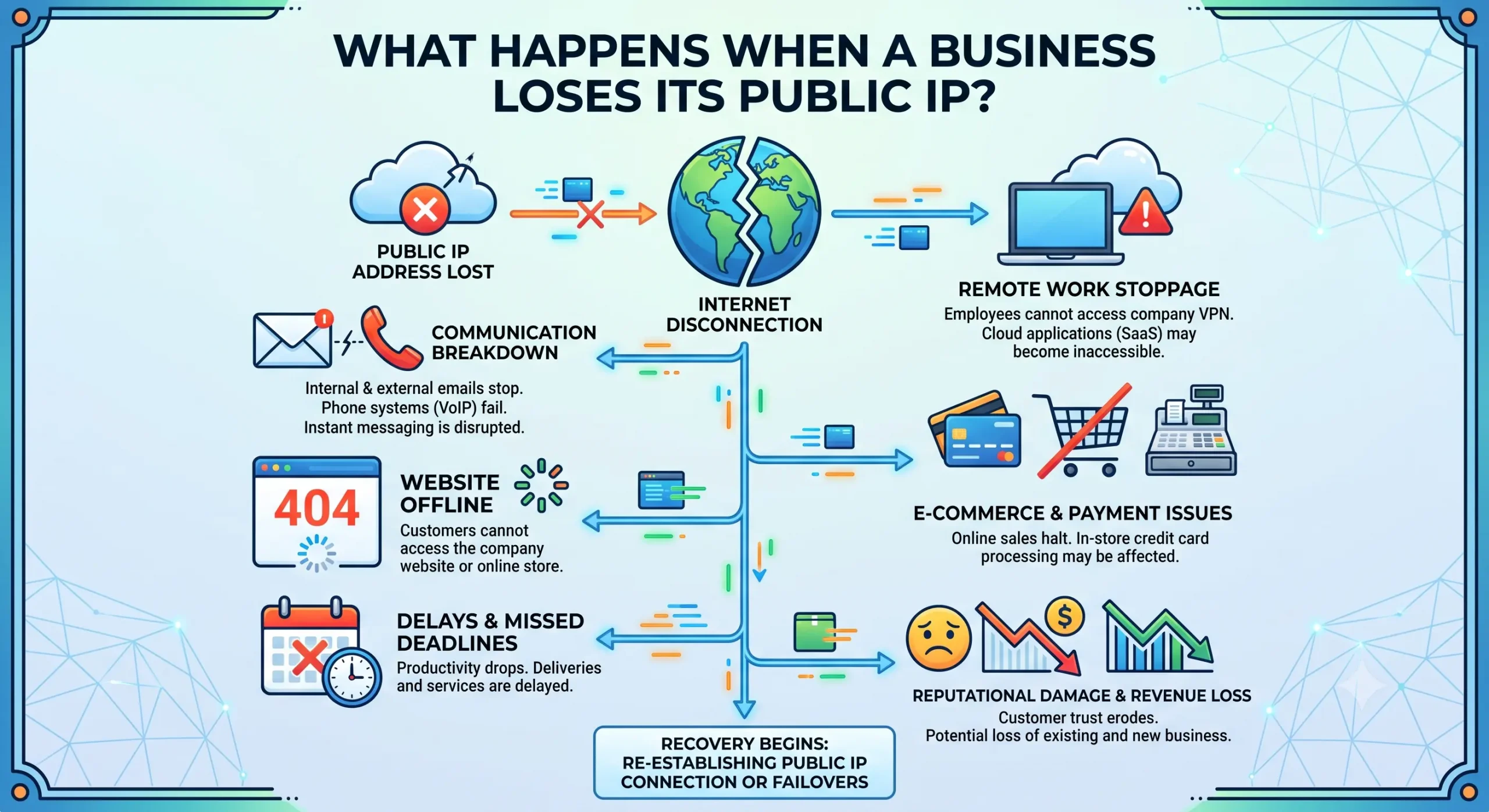
Transfers should not interrupt running networks or create unnecessary instability for customers, users, or operators.
It should protect accountability.
Abuse contacts, routing contacts, legal contacts, and responsible parties should remain identifiable.
It should protect auditability.
The transfer history should be reviewable, documented, and resistant to manipulation.
These are registry functions.
They are not commercial judgments.
What IP Transfer Policy Should Not Police
A registry should not use IP transfers to police commerce.
It should not decide whether the buyer paid too much.
It should not decide whether the seller should have sold.
It should not decide whether the buyer’s business model is socially preferred.
It should not decide whether leasing, financing, hosting, resale, or infrastructure arbitrage is morally acceptable.
It should not decide whether capital should remain inside a historical region.
It should not decide whether customers are in the “right” geography.
Those questions may belong to contract law, tax law, competition law, securities law, national regulators, courts, shareholders, or counterparties.
They do not belong to a uniqueness coordinator.
The registry’s question is not: “Do we approve of this transaction?”
The registry’s question is: “Does the record accurately reflect who is responsible for this number resource?”
The False Premise of Registry Ownership
Commercial policing often rests on a false premise: that because the registry maintains the record, it owns the resource.
But maintaining a record is not ownership.
A land registry does not own every house.
A company register does not own every company.
A securities depository does not own every business whose shares it records.
The same principle should apply to Internet number resources.
The registry’s authority is administrative and coordinative. Its legitimacy comes from performing a narrow function reliably. When it expands that function into commercial approval, geographic control, or business-model enforcement, it acts beyond the reason it exists.
The registry record should answer one question:
Who is responsible for this IP address block?
It should not answer:
Does the registry approve of this transaction?
The Better Rule: Record Reality
A better rule for IP transfers is simple:
If a transfer is lawful, documented, technically valid, and does not break uniqueness, the registry should record it.
That is not deregulation.
It is proper regulation of the correct object.
The correct object is the registry record.
The registry should verify identity, authority, uniqueness, and operational responsibility. It should not convert those checks into a broad power to approve or reject commercial life.
The Internet does not need registries to decide which commercial arrangements deserve to exist.
It needs registries to maintain accurate, neutral, auditable records of number resource responsibility.
Thin Coordination Is Better Governance
The Internet works because its shared layers are narrow.
The common layer should do only what must be common. Everything else should remain with operators, markets, contracts, courts, customers, and running networks.
That is the principle of thin coordination.
For IP transfers, thin coordination means the registry should focus on:
uniqueness;
accurate records;
proof of control;
transfer history;
operational continuity;
abuse and routing contact accuracy;
auditability;
clear procedures;
replacement paths if institutional failure occurs.
It should not use the database to control commerce.
A registry that does less, but does it reliably, is more legitimate than a registry that does more because it can.
Conclusion: IP Transfers Are About Accuracy
IP transfers should protect accuracy, not police commerce.
When transfers are treated as permission events, registries become gatekeepers.
When transfers are treated as accuracy events, registries remain coordinators.
That difference matters because the Internet was not built by permission. It was built by coordination.
The registry may record.
The registry may verify.
The registry may preserve uniqueness.
But it may not rule the market through the database.
The goal of IP transfer policy should be simple:
Protect uniqueness.
Record reality.
Maintain continuity.
Do not police commerce.
FAQs
The main purpose of an IP transfer is to update the registry record so that it accurately identifies the party responsible for an IP address block. The transfer process should preserve uniqueness, accountability, and operational continuity.
IP transfers should focus on accuracy because operators rely on registry data for routing, abuse handling, contact information, legal clarity, and operational responsibility. Inaccurate registry records create uncertainty and operational risk.
No. RIRs should verify identity, authority, uniqueness, and record accuracy. They should not use transfer policy to judge business models, pricing, customer geography, leasing structures, or capital allocation.
No. IPv4 scarcity makes accurate records more important, but it does not turn registries into owners, landlords, or market regulators. Scarcity should narrow the registry’s role to accuracy, uniqueness, continuity, and auditability.
Verification checks whether the transfer is documented, authorized, technically valid, and accurately recorded. Permission gives the registry discretionary power to approve or reject commercial arrangements. IP transfer policy should rely on verification, not permission theater.