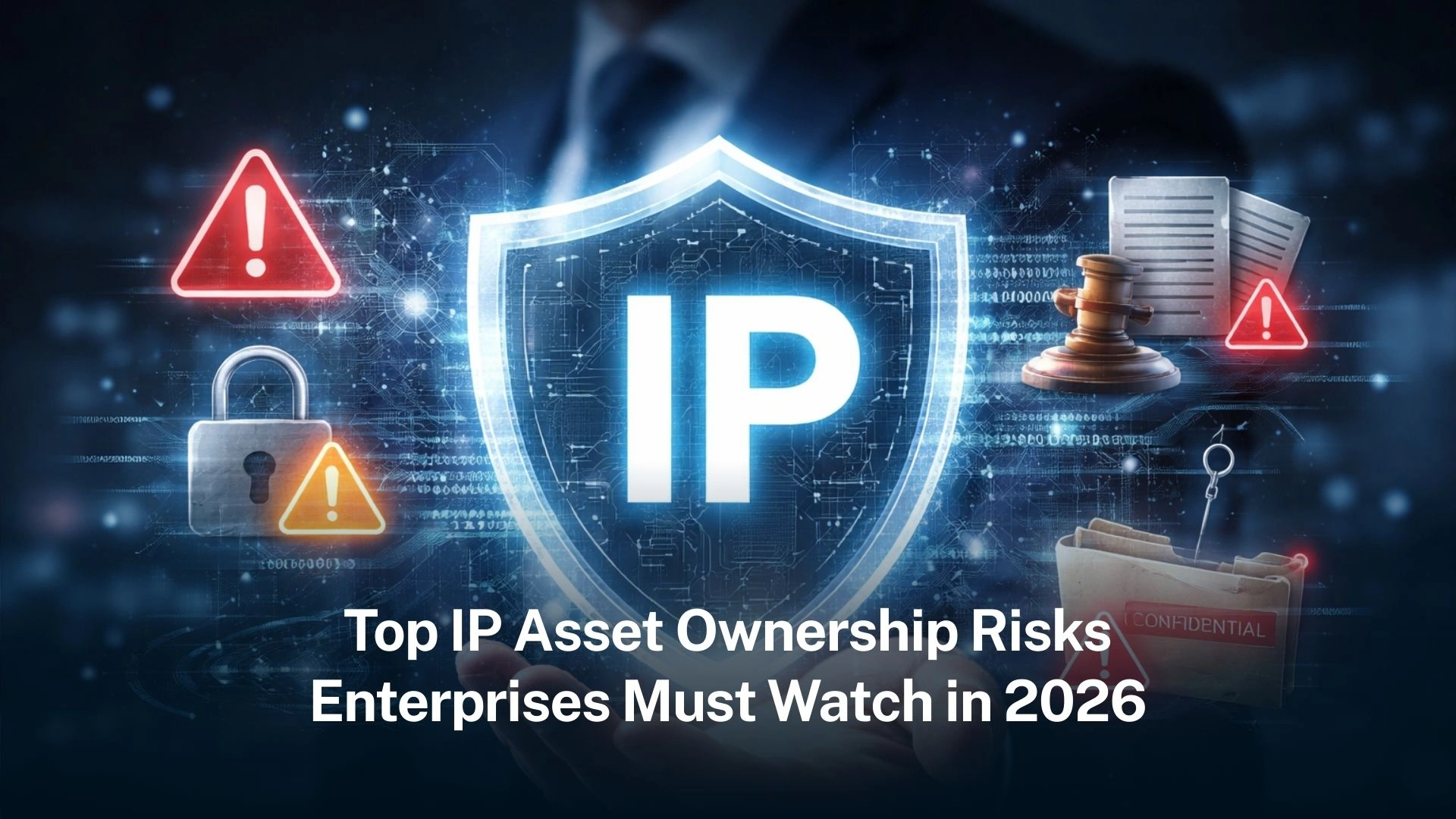
Top IP Address Asset Ownership Risks Enterprises Must Watch in 2026
As IPv4 scarcity intensifies, enterprises can no longer treat IP address holdings as simple technical resources. In 2026, unclear ownership, weak legacy documentation, and misalignment between registry recognition and asset reality are becoming serious business risks.
Introduction: why IP address ownership risk is rising
For many enterprises, IP address assets — especially IPv4 holdings — have become far more than operational identifiers. They now support network continuity, service delivery, infrastructure scaling, and in some cases balance-sheet value. Scarcity has pushed IPv4 into a new category: not merely a technical resource, but an economically material asset.
That shift has changed the nature of ownership risk.
In 2026, enterprises are operating in a market where IPv4 blocks are scarce, transferable, commercially priced, and increasingly treated as strategic infrastructure assets. Yet many of the assumptions surrounding them still come from an earlier internet era, when address space was viewed mainly as an administrative allocation rather than something with real market value and enterprise consequences.
This creates a structural problem. A company may rely on an address block operationally, account for it strategically, or even treat it as part of a transaction, while the underlying ownership position remains weak, incomplete, or overly dependent on institutional recognition. In that environment, the gap between asset reality and governance reality becomes a genuine source of risk.
That is why IP address ownership is no longer just a network management issue. It is becoming a broader enterprise governance issue involving control, transferability, continuity, and legal certainty.
Why IP address assets now matter at the enterprise level
IP address assets matter because they sit at the intersection of technical necessity and economic value.
IPv4 is no longer abundant. For many businesses, especially those operating networks, digital platforms, cloud-linked environments, telecom systems, or large-scale hosting infrastructure, address space remains operationally indispensable. At the same time, scarcity has made IPv4 commercially significant. Blocks can be bought, sold, leased, reviewed in diligence, and scrutinised in corporate transactions.
That means enterprises should stop thinking about address holdings as low-level infrastructure trivia. They now function more like strategic digital assets whose value depends on control, recognition, and continuity.
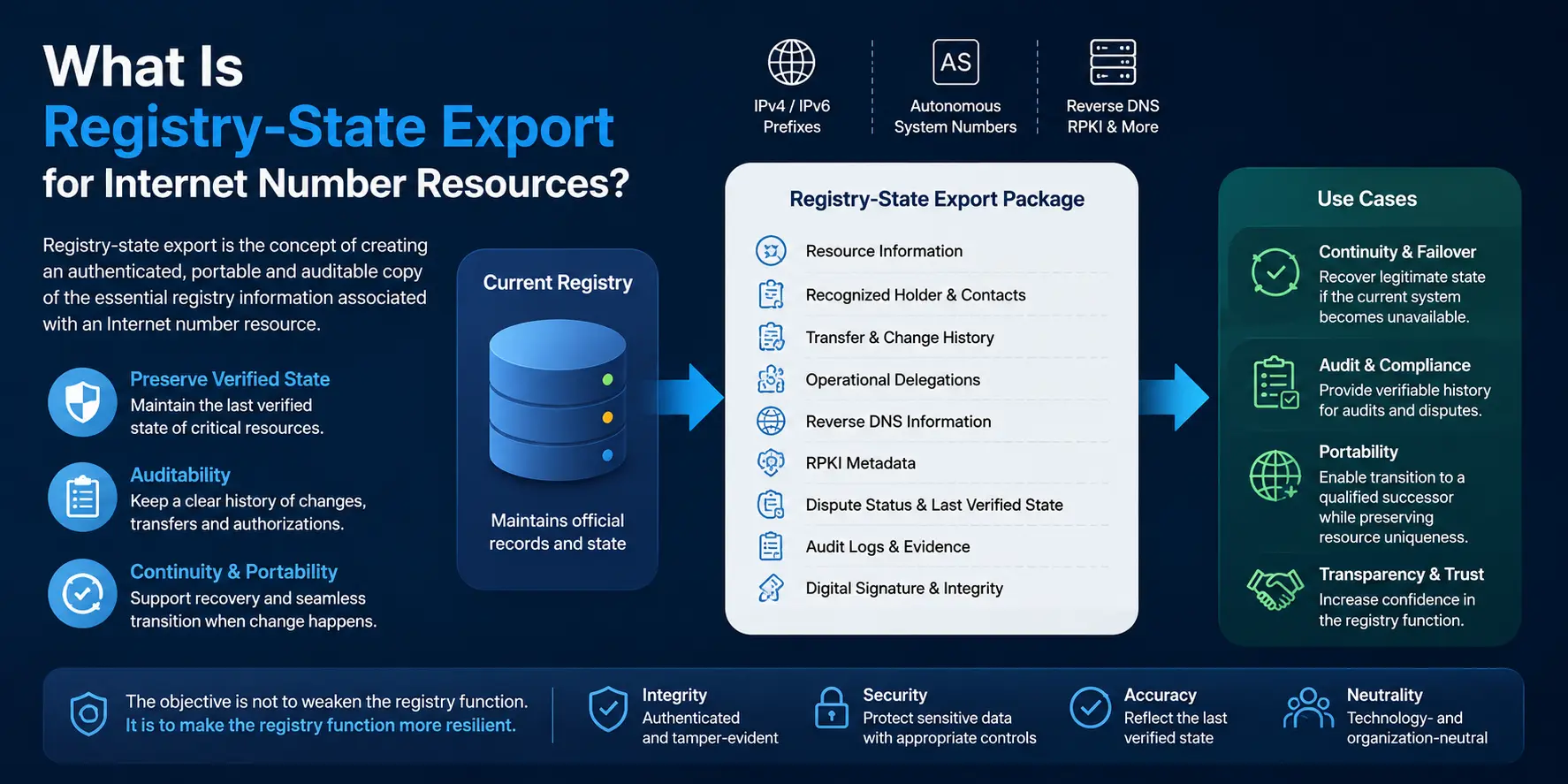
But unlike physical property, IP address assets are not secured by possession alone. Their practical security depends on a combination of historical allocation records, legal documentation, corporate succession, registry status, transfer history, and institutional treatment. If those layers are misaligned, the asset may be in use yet still vulnerable.
This is the core reason ownership risk is rising: enterprises are relying on an asset class whose economic importance has evolved faster than the governance assumptions surrounding it.
1. Legacy IPv4 holdings with weak chain of title
One of the biggest ownership risks in 2026 comes from legacy IPv4 holdings.
Many enterprises obtained address space years ago under conditions that were far less formal than today’s transfer and registration environment. Those holdings may still be routable and operationally critical, but the documentation behind them is often incomplete. The registered contact may be outdated, the original receiving entity may no longer exist, or the company may have gone through mergers, acquisitions, restructurings, or name changes without fully updating the historical record.
That creates a dangerous illusion of certainty. A block can be used for years and still have a weak ownership profile.
The problem becomes more serious when the enterprise wants to transfer the asset, include it in due diligence, defend it in a dispute, or align it with a broader asset governance framework. If the chain connecting original allocation, current control, and present legal ownership is not clear, the asset may prove less secure or less transferable than expected.
For enterprises with legacy space, long-term use is not the same as clean title.
2. Registry recognition and legal ownership are not always the same
A second major risk is the assumption that registry recognition automatically settles ownership.
In practice, registry records, operational control, beneficial use, contractual entitlement, and legal ownership do not always align. A company may appear associated with an address block in registry systems, but that does not always answer the harder question of who holds the strongest ownership claim. Conversely, a company may believe it has a legitimate ownership position while still facing difficulties if institutional recognition is incomplete or contested.
This matters because registry-layer decisions can materially affect asset continuity, perceived legitimacy, transferability, and market confidence.
From an enterprise perspective, that means ownership risk cannot be reduced to “what the database says.” Registry treatment is important, but it is only one layer of the asset reality. If recognition and ownership drift apart, the business may find itself exposed at exactly the moment the asset becomes strategically important.
This is one of the defining tensions in the modern IPv4 environment: a scarce and economically valuable asset is still mediated through governance structures that do not always map neatly onto ordinary asset logic.
3. M&A and restructuring can expose hidden ownership weaknesses
IP address assets are still frequently under-analysed in mergers, acquisitions, divestments, and corporate restructurings.
That is a mistake, especially in sectors where address space is operationally significant or commercially valuable. Enterprises often focus heavily on software, patents, customer contracts, data, and regulatory obligations, while IP address holdings are treated as a technical detail for the network team. But when those holdings are legacy assets, or when they have moved across related entities over time, hidden weaknesses can surface quickly.
Common problems include address blocks sitting under predecessor entities, informal transfers within a corporate group, undocumented succession after a merger, and operational use by one subsidiary where another entity appears to hold the historical entitlement.
These issues may not become visible until a transaction requires precision. At that point, a weak ownership position can affect valuation, post-deal integration, transfer planning, or the buyer’s confidence in the asset base.
Enterprises involved in infrastructure-heavy or internet-reliant transactions should now treat IP address ownership verification as part of serious diligence, not as a technical afterthought.
4. Leasing and usage arrangements can be mistaken for ownership
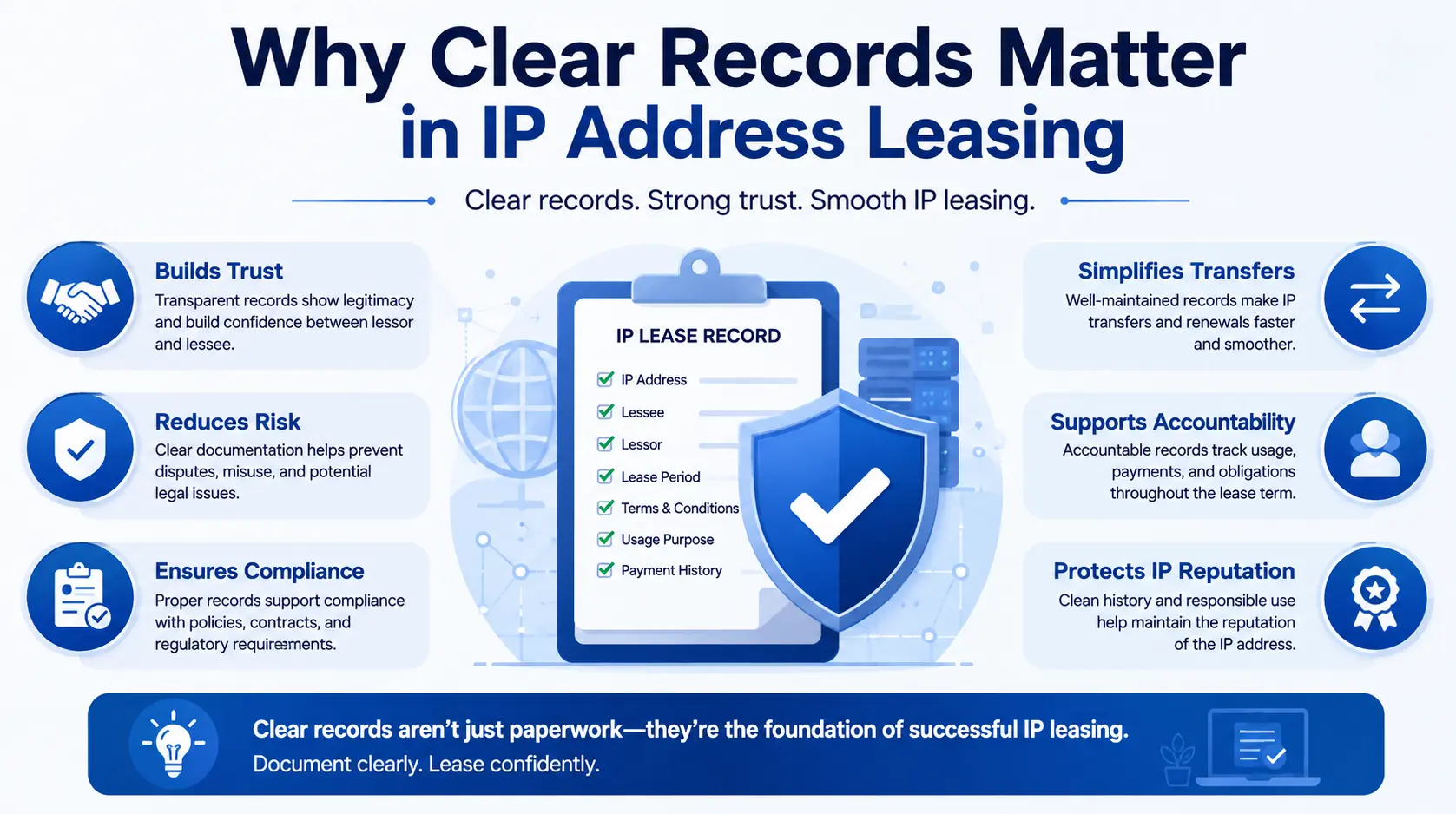
As IPv4 scarcity deepens, leasing, sub-allocation, hosted usage, and other indirect access models have become more common. These arrangements may solve short-term operational needs, but they can also create long-term ownership confusion.
A company may use address space extensively and build services around it without actually owning the asset. Another may have contractual access but no meaningful transfer rights. In some cases, market participants begin to treat longstanding use or routing control as if it were equivalent to title. It is not.
This distinction becomes critical when the enterprise tries to transfer the block, book it as a strategic asset, rely on it in financing discussions, or defend continuity after a service dispute. What looked like ownership may turn out to be a revocable usage arrangement or a position dependent on someone else’s institutional standing.
In a scarce market, confusing access with ownership is not a minor technical mistake. It is an asset governance failure.
5. Policy language still lags behind asset reality
Another major risk is conceptual rather than procedural.
IPv4 address blocks today are scarce, tradable, valuable, and commercially relied upon. They are bought and sold, leased, reviewed in diligence, and increasingly treated as assets with real economic consequence. Yet parts of the governance environment still describe number resources in administrative terms that understate this reality.
That mismatch matters because language shapes institutional behaviour.
If a valuable and transferable asset is still treated through frameworks designed for a simpler allocation era, enterprises may find that the governance layer does not fully reflect the level of reliance, investment, and risk now attached to the resource. Transferability may depend on systems that were not built for asset-grade certainty. Recognition may carry major economic consequences without corresponding accountability. Administrative concepts may still be used to describe what has plainly become a high-stakes asset environment.
For enterprises, the takeaway is simple: do not assume the governance language surrounding IPv4 has fully caught up with its market reality.
6. Weak internal governance over address portfolios
A final risk sits inside the enterprise itself.
Many companies still do not govern IP address assets with the discipline applied to other valuable holdings. Address blocks may be spread across departments, inherited through old transactions, managed informally by technical teams, or documented in ways that do not align with legal and corporate records.
This can produce several problems at once. The company may not know exactly what it owns, what it merely uses, what sits under outdated entities, what may be transferable, or what remains dependent on fragile historical arrangements. That uncertainty reduces strategic flexibility and increases exposure during audits, transactions, disputes, or infrastructure changes.
Weak internal governance also makes it harder to distinguish between assets with real ownership certainty and assets that only appear stable because nobody has tested the underlying assumptions yet.
As IPv4 becomes more economically significant, that is no longer acceptable.
How enterprises can reduce IP address ownership risk
Enterprises do not need to eliminate every complexity in the IP address environment, but they do need to govern these assets with greater seriousness.
A practical approach usually starts with verifying what the company actually holds and on what basis. That includes reviewing legacy documentation, reconstructing chain of title where possible, checking whether registry records align with current legal entities, and identifying where the business is relying on leased or hosted space rather than owned assets.
It also means treating address assets as part of enterprise-level governance. They should be considered in M&A diligence, restructuring exercises, infrastructure planning, and risk review processes. Where address space is economically or operationally material, companies should not leave it entirely inside technical silos.
Most importantly, enterprises should recognise the difference between operational control and ownership certainty. In 2026, that gap is where many of the biggest address-asset risks now sit.
Conclusion: IP address ownership is becoming a structural enterprise issue
The ownership question around IP address assets is no longer marginal.
As IPv4 scarcity deepens, address blocks are increasingly functioning as economically meaningful infrastructure assets. But the systems surrounding them still carry traces of an earlier administrative model that does not always match present-day market behaviour or enterprise reliance.
That is why the real risk is not just missing paperwork. It is the broader misalignment between asset reality, legal certainty, institutional recognition, and governance design.
For enterprises, the lesson is clear. IP address ownership should not be treated as a minor registry matter or a narrow technical issue. It should be treated as a strategic asset governance issue, especially where continuity, transferability, and transaction value are involved.
In 2026, the companies best positioned to protect value will be those that understand a simple truth: when a resource becomes scarce, transferable, and economically material, ownership clarity becomes part of infrastructure strategy.
FAQs
IP address assets usually refer to internet number resources, especially IPv4 blocks, that enterprises rely on for network operations, service continuity, and infrastructure growth. Because IPv4 is scarce and transferable, these holdings are increasingly treated as economically significant assets.