Note:54 On Who Gets to Speak for a Continent, a Community, or “The End User”

There is a whole class of people in Internet governance who do not build networks, do not finance infrastructure, do not carry operational downside, and do not bear meaningful liability when systems fail. Yet they constantly speak in the name of regions, communities, users, and even entire continents. Their real product is not connectivity. Their real product is representation.
The same disease appears at both the RIR layer and the ICANN layer. At the RIR level, an administrative map is slowly inflated into regional authority. At the ICANN level, institutional boxes are inflated into “communities,” and those communities are then treated as if they had delegated real political voice. The trick is always the same: turn an administrative category into a moral claim.
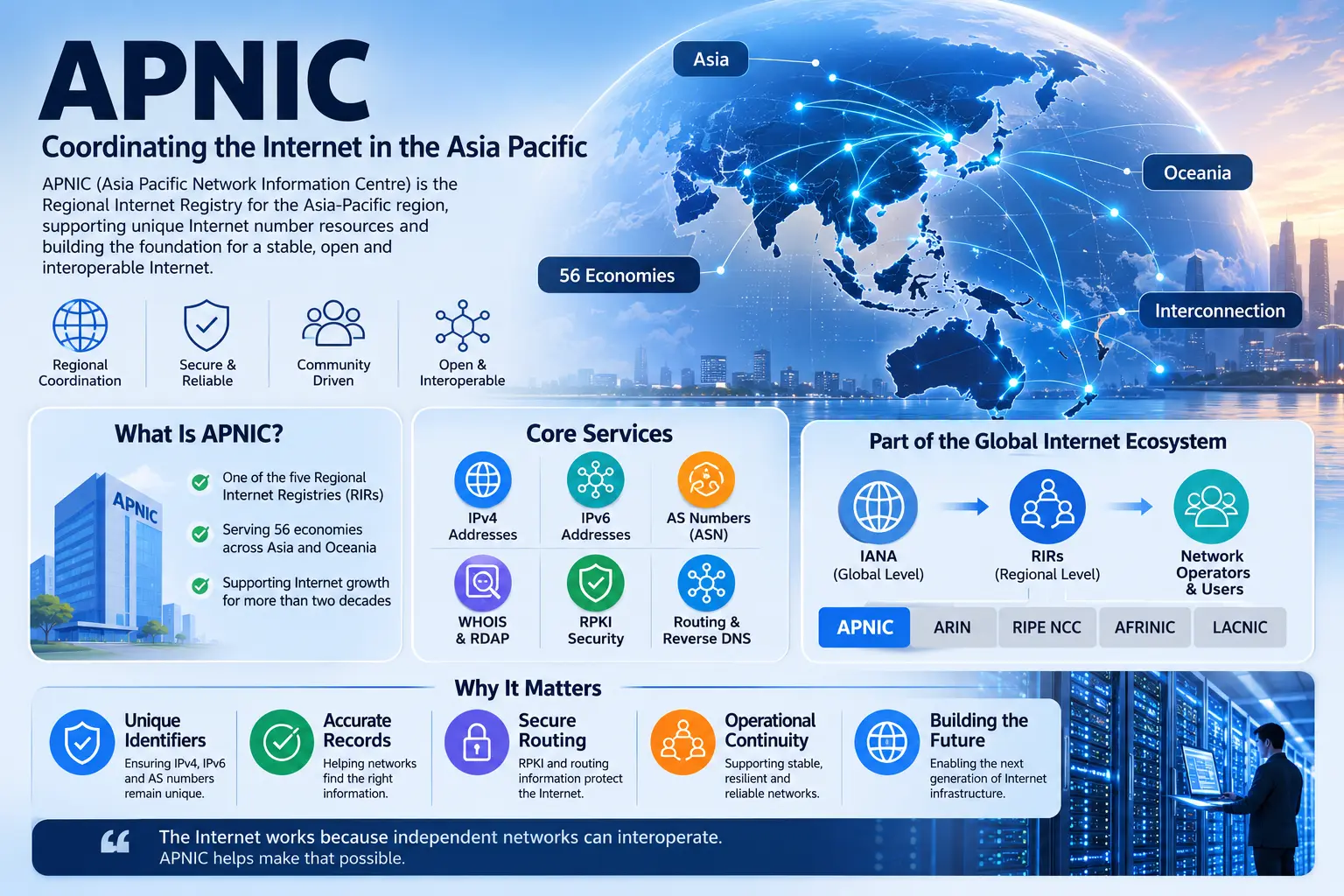
The move toward Regional Internet Registries was not the discovery of a deep truth about culture, sovereignty, or civilizational boundaries. It was a scaling response. ICP-2 later hardened that scaling compromise into doctrine by requiring a new RIR to serve a large geographic region of approximately continental size, with each region served by a single RIR under one management and in one location. What began as administrative convenience was slowly mistaken for political architecture.
That mistake matters because a service region is not a sovereign people. RIPE says the RIPE NCC serves more than 20,000 members in 76 countries across Europe, the Middle East, and Central Asia, while AFRINIC divides its own service region into six sub-regions for statistics and board elections, and says its board includes representatives from each of Africa’s six sub-regions plus two non-regional directors. These are service geographies and governance mechanics, not coherent political identities. A colored map and a regional seat allocation system do not create a continent-wide mandate.
This is exactly why so much commentary around AFRINIC is wrong in two opposite ways. One side says AFRINIC proves Africa is dysfunctional. The other says AFRINIC somehow embodies Africa itself, so that criticism of AFRINIC is criticism of Africa, and obtaining resources through AFRINIC is taking “Africa’s property.” Both claims are false. IANA says its primary role is to allocate pools of unallocated IP addresses and AS numbers to the RIRs, and AFRINIC describes itself as the distributor and manager of number resources for its service region. That makes AFRINIC a distribution and registration channel inside a global system, not the sovereign source of the assets it administers.
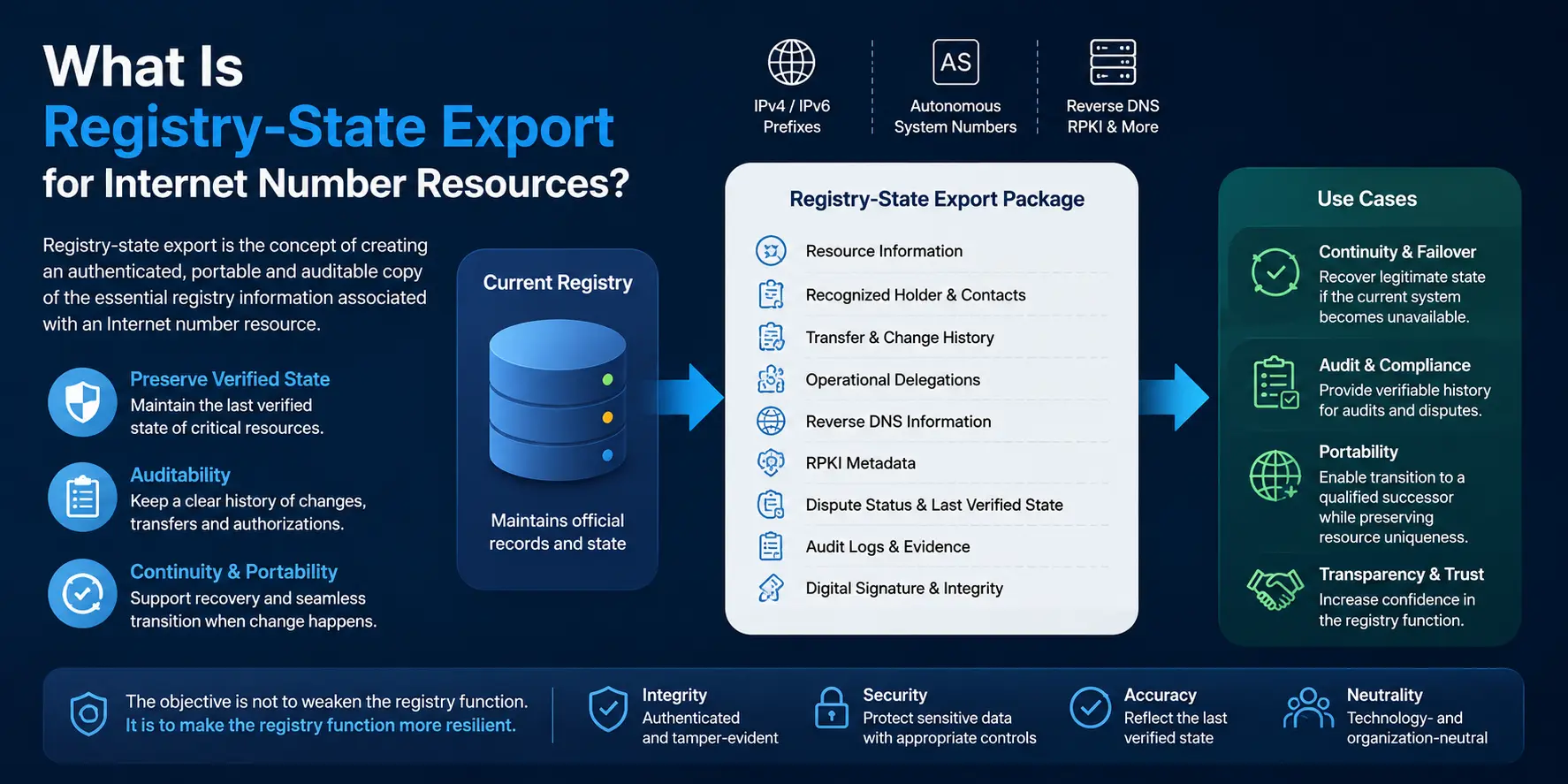
Once that is clear, the asset question becomes simple. Networks build businesses around number resources. They deploy capital, engineers, routers, contracts, support systems, and customer relationships around them. They bear the downside when continuity is impaired, transferability is blocked, or recognition becomes unstable. The registry does not bear that downside. The conference speaker does not bear that downside. The regional representative does not bear that downside. The operator does.
So the only economically serious presumption is also the simplest one. The network that lawfully holds the resource, operates it in production, finances it, and bears the downside is the real asset holder in substance. Coordination is a service layer, not a superior ownership claim. Record-keeping is not sovereignty. Administration is not title.
This is where the language of “stewardship” becomes dangerous. A narrow coordination function can be legitimate. A bookkeeping and registration function can be useful. But once coordination is inflated into stewardship, and stewardship is inflated further into political entitlement, the institution changes character. A registry stops being a registry and starts behaving like a guardian, a trustee, and then a political authority.
The RIR system itself already contains this temptation. RIPE says the duties of an RIR include the coordination and representation of the members in its region. AFRINIC says its board is elected on a regional representation basis, and that once appointed, each director represents the whole region rather than just the sub-region seat from which they were elected. That is already a narrow institutional fiction: members in a service region are one thing; “the region” as a political subject is something else entirely.
ICANN pushes the same logic even further. ALAC says it is the primary organizational home for the voice and concerns of the individual Internet user, and ICANN’s own groups page describes At-Large as the voice of the individual user in ICANN. AFRALO describes itself as the home of the individual Internet user community for the African region. The GAC says it is the voice of governments and intergovernmental organizations in ICANN’s multistakeholder structure. The Business Constituency calls itself the voice of commercial Internet users, and the NCUC says it gives voice and representation to noncommercial organizations and users in ICANN processes. 
But who exactly appointed “the individual Internet user”? Who authorized a small number of meeting regulars, committee members, procedural insiders, and policy professionals to speak for billions of users who never voted for them, never delegated to them, and usually have never heard of them? No serious answer exists. What exists instead is institutional theater: a category is created, a structure is built around it, participants enter the structure, and then participation inside the structure is quietly treated as evidence of representation.
That is not representation in any serious political sense. It is categorization plus procedure plus repetition. A label is created, a few people enter the room, and over time the room starts speaking as if it were the thing itself. That is how a process class turns administrative structure into moral authority.
I do not object to participation. I object to inflated mandate. Call an advisory committee an advisory committee. Call a stakeholder group a stakeholder group. Call a participant a participant. But do not pretend that a self-selected structure inside ICANN has somehow acquired the right to speak for “the end user,” and do not pretend that a regional registry has somehow acquired the right to speak for a continent.
That is also why the answer is not to replace registry overclaim with state overclaim. Internet number resources are not national trophies. They are not continental entitlements. They are not raw material for political theater. And the answer is not one global monopoly either, because scaling the same representational fiction to planetary size would solve nothing.
The only serious direction is narrower authority, stronger accountability, clearer ownership logic, decentralization where possible, and interoperability where necessary. The design target should be continuity, portability, verifiability, and limits on arbitrary power. Not mythology about geography. Not mythology about representation.
No one speaks for a continent. No one speaks for “the end user.” People speak for institutions, committees, memberships, and sometimes for governments that actually sent them. That is already the maximum honest claim in most of this space. The moment the claim expands beyond that, the fiction begins.