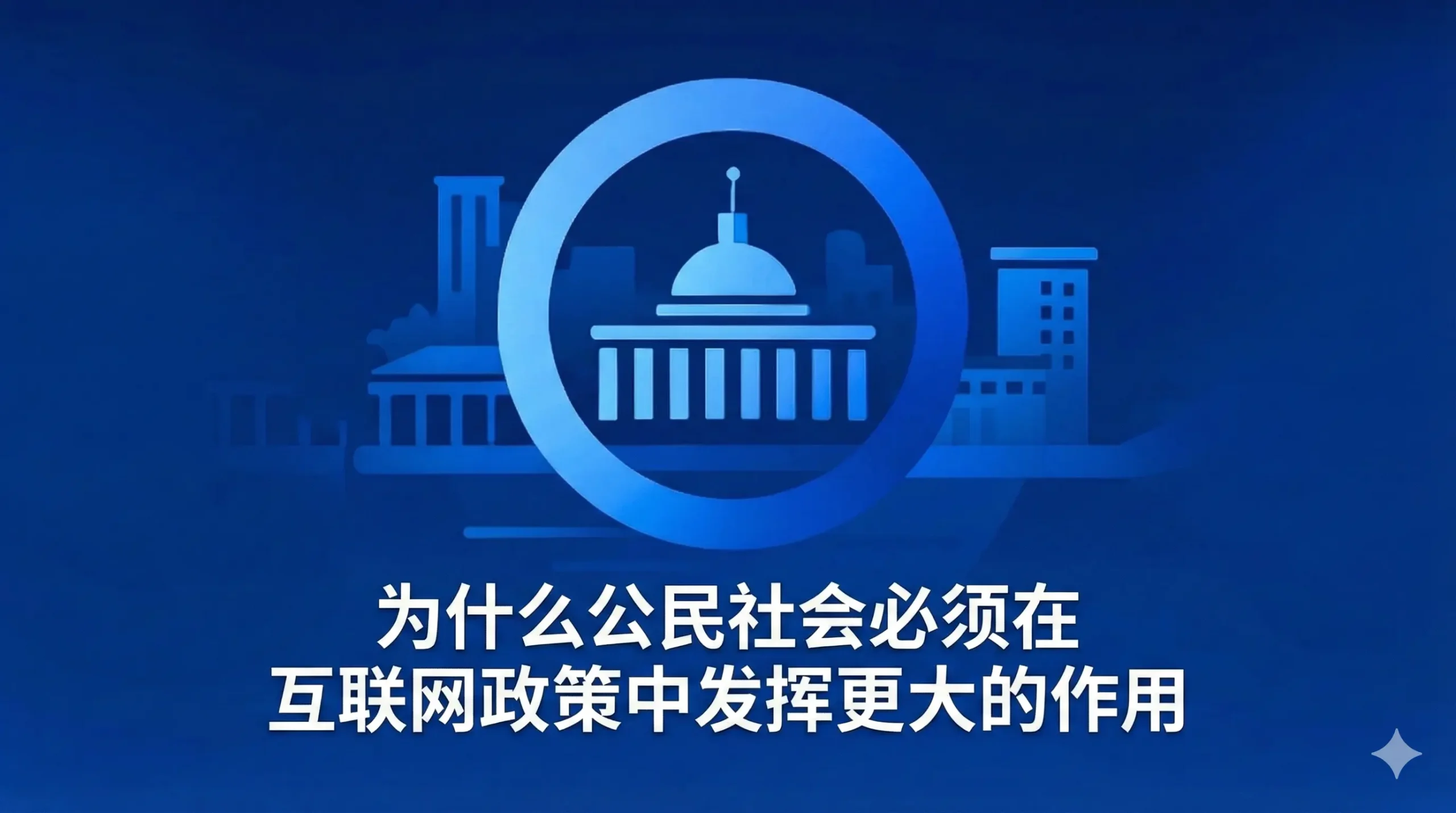
Why Civil Society Must Play a Bigger Role in Internet Policy
Civil society brings rights-based oversight, local expertise, and accountability to Internet policymaking; governments and industry cannot formulate digital rules on their own.
Civil society protects human rights online, scrutinizes governments and platforms, and provides technical, legal, and community expertise.
Excluding civil society increases the risks of censorship, shutdowns, and policy bias; inclusive multistakeholder governance can produce more resilient and legitimate rules.
Introduction: The Real Harm Caused by Governance Gaps
Internet policy is no longer a niche technical issue—it affects electoral integrity, the dissemination of public-health information, economic opportunity, and fundamental rights. Yet policy forums and legislative processes still favor governments and large technology companies, while civil society organizations (CSOs) that represent affected groups, defend rights, and provide grassroots expertise are often marginalized. The result is ineffective policy and greater social harm.
What We Mean by Civil Society in Internet Policy
In this context, “civil society” includes nongovernmental organizations, digital-rights groups, community networks, academic researchers, trade unions, consumer organizations, journalists, and grassroots movements. These actors turn first-hand experience into policy recommendations, monitor implementation, litigate when rights are violated, and operate user-facing services that test how rules work in practice. Their legitimacy comes from close ties to users and often from deep technical or human-rights expertise.
Civil Society Defends Human Rights—and Proves It with Evidence
Digital-rights organizations have repeatedly documented harms that are often overlooked: Internet shutdowns, arbitrary takedowns, surveillance abuse, and platforms amplifying disinformation. For example, Access Now and the #KeepItOn coalition tracked record numbers of Internet shutdowns and helped reverse some government orders, showing that advocacy can produce tangible results for users. Activists warn: “Telecommunications and Internet service providers that shut down services on government orders also bear responsibility for human-rights violations.”
Technical Knowledge and Community Foundations
Civil society organizations are not merely advocates; they often possess specialized technical knowledge, from measuring Internet shutdowns to designing privacy-preserving tools. Evidence from community networks and research groups can counter narrow commercial narratives and demonstrate the real-world effects of policy choices, especially in regions and language communities overlooked by industry models. This bridge between technology and community is essential to credible, enforceable regulation.
Why Inclusion Matters: Legitimacy, Durability, and Quality
Policymaking without broad participation can be seen as imposed and illegitimate. Inclusive multistakeholder processes—such as the Internet Governance Forum (IGF) model—can build consensus, reveal trade-offs, and reduce the chance that rules will be captured by narrow interests. The United Nations and other international forums have repeatedly stressed that broad participation is essential to building a resilient digital future.
Cases in Which Civil Society Changed Policy Outcomes
From opposing sweeping platform censorship to promoting rules on service shutdowns, civil society interventions have shaped laws and corporate practices. Civil society’s push for human-rights accountability helped shape European institutions’ Internet-freedom policies and encouraged public debate around instruments such as the Digital Services Act. These interventions show that, when supported and resourced, civil society organizations can change policy and practice.
Expert Voices: Why the Argument Matters
“It is time to stop debating whether the Internet empowers individuals and societies and focus instead on the more fundamental and urgent question of how technology should be designed and governed to support the rights and freedoms of all Internet users worldwide,” writes Rebecca MacKinnon, emphasizing the urgency of rights-centered governance.
Renata Ávila, a long-standing advocate for digital commons and democratic digital infrastructure, is blunt: “The creative Internet is gone; what we have now is an Internet of surveillance and control.” She argues that today’s policy choices will determine whether the Internet serves civic life or concentrates power—underscoring the need to empower civil society organizations to challenge those choices
Barriers to Effective Participation
Despite their value, civil society organizations (CSOs) face structural barriers: limited funding, closed consultation windows, opaque drafting processes, and, in some countries, intimidation or legal restrictions. Language barriers and technical complexity also exclude grassroots groups. Without deliberate reforms—including funding, capacity building, translation services, and protected spaces for participation—the same powerful actors will continue to write the rules.
Practical Measures to Expand Civil Society’s Influence
Fund Participation, Not Just Rhetoric: Governments and donors should finance sustained civil-society participation rather than temporary “consultation theater.”
Require Transparency in Drafting: Publish proposed texts and impact assessments promptly so they can be scrutinized and receive constructive feedback.
Support Technical and Legal Capacity Building: Provide training and secondment opportunities so communities can turn local harms into policy proposals.
Protect Civic Space: International instruments and domestic safeguards must prevent retaliation against digital-rights defenders.
Embed Multistakeholder Governance at Every Level: From national regulators to intergovernmental negotiations, civil society should be a formal participant, not an appendage invited only on occasion.
Benefits for Governments and Businesses
Civil society participation can produce better, more enforceable rules, reducing the risks of litigation, political backlash, and regulatory failure. It can also build public trust—especially important for policies that depend on compliance, such as platform-transparency requirements, content-moderation standards, and data-governance frameworks. In short: inclusion is good governance.
The Risks If Governance Gaps Persist
If civil society participation remains low, policy will tend toward reactive, security-first models that erode human rights and fragment the global Internet. We will see more Internet censorship, more discriminatory enforcement, and rules favoring entrenched market interests. These consequences are already visible in rising Internet censorship and disputes over content governance. The absence of civil society is therefore not only unfair, but strategically dangerous.
Conclusion: A Pragmatic Call to Action
Policymakers and industry leaders must move beyond symbolic consultation. They should treat civil society as a key partner—fund it, listen to it, and co-design mechanisms with it—because the alternative is fragile and unjust governance that ultimately harms citizens. As MacKinnon and others have noted, the future of democratic life online depends on who has the power to write the rules today.