What if an Internet registry fails?
A failure in Internet Registry systems could disrupt IPv4 allocation, routing trust, and global connectivity, exposing fragile governance structures worldwide.
The global Internet depends on a small number of registries coordinating IPv4 address allocation and routing data
Failure of a registry could trigger outages, security risks, and disputes over ownership of critical Internet resources
What is an Internet registry and why it matters
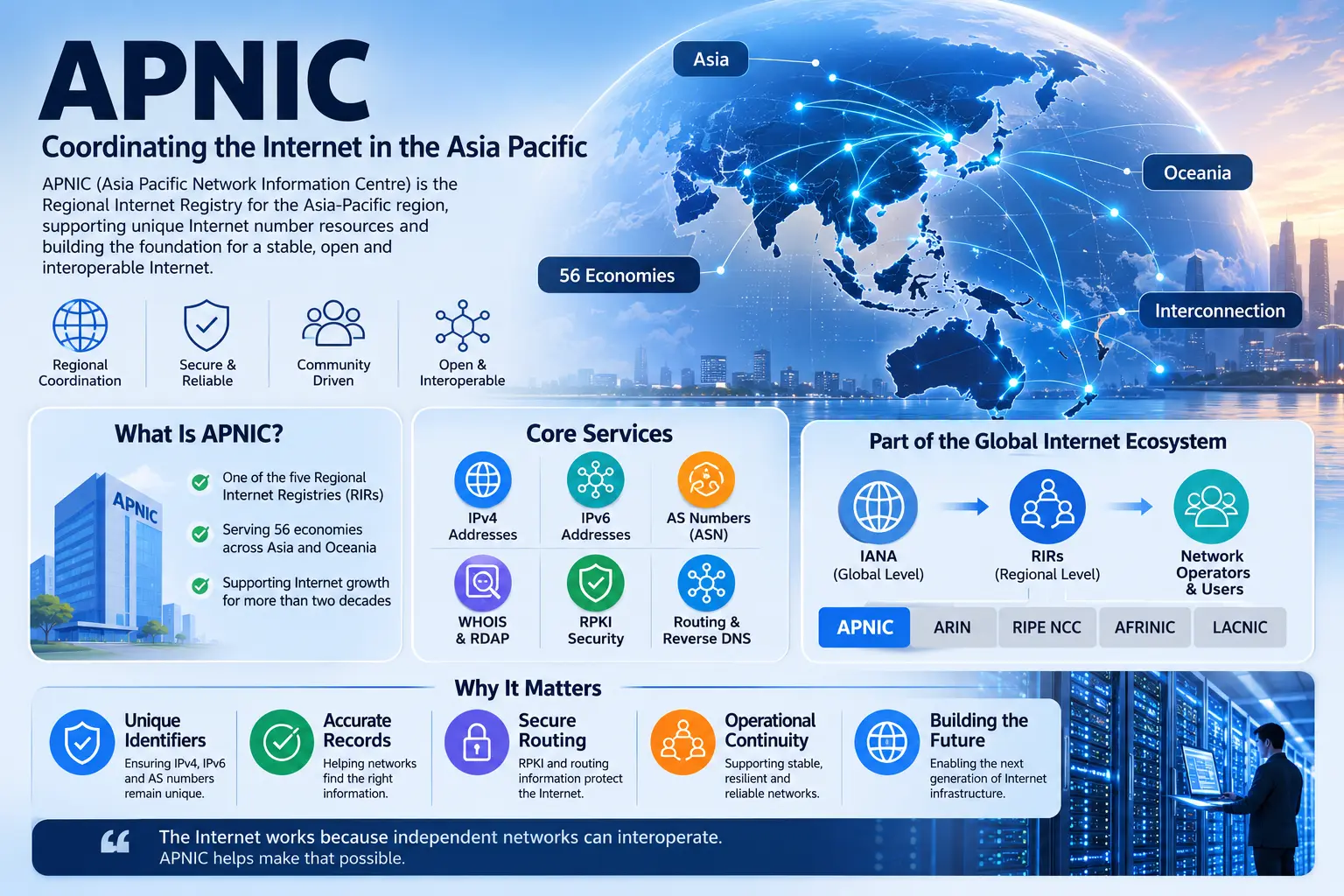
At the core of the Internet’s infrastructure lies a relatively small group of organisations known as Regional Internet Registries (RIRs). These bodies manage and distribute IP address resources, including scarce IPv4 addresses, ensuring that every device connected to the Internet can be uniquely identified.
Five RIRs operate globally, coordinating with the Internet Assigned Numbers Authority (IANA) to allocate address space and maintain accurate registration records. Their role is fundamental: they prevent duplicate allocations, maintain routing integrity, and provide authoritative ownership data for networks.
Without this system, the Internet would struggle to function reliably. As one technical explanation notes, registries ensure “no two devices receive the same address by mistake,” highlighting their role in maintaining global coherence.
The growing pressure of IPv4 exhaustion
The risk of registry failure cannot be separated from the broader crisis of IPv4 exhaustion. IPv4, designed with roughly 4.3 billion addresses, has been effectively depleted due to the explosive growth of connected devices.
All RIRs have either run out of freely available IPv4 addresses or are operating under strict rationing policies.
This scarcity has already reshaped the Internet economy:
Organisations now rely on transfer markets to obtain addresses
Prices for IPv4 addresses have surged significantly
Waiting lists for allocations can stretch for months or longer
The system is no longer one of abundance, but of careful redistribution. That makes registries not just administrative bodies, but gatekeepers of a scarce global resource.
What happens if an Internet registry fails?
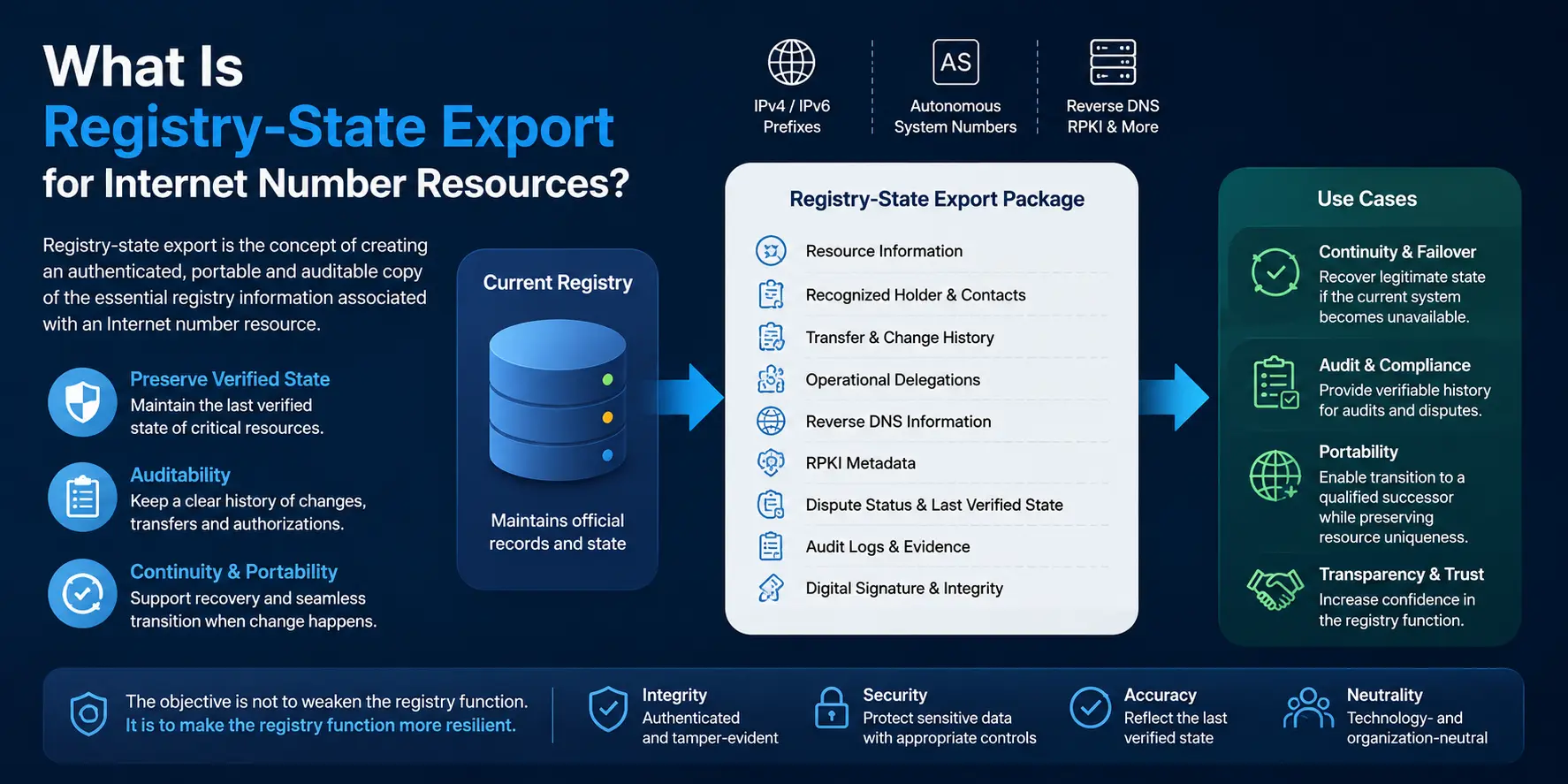
A failure of an Internet registry—whether due to governance breakdown, legal disputes, financial collapse, or cyberattack—would have far-reaching consequences.
Loss of authoritative data
Registries maintain critical databases of IP address ownership and routing policies. If a registry becomes unavailable or unreliable:
Network operators may lose trusted records of who owns which IP blocks
Routing decisions could become inconsistent or insecure
Disputes over address ownership could increase
This is particularly dangerous because routing systems rely on registry data to validate legitimate traffic paths.
Routing instability and security risks
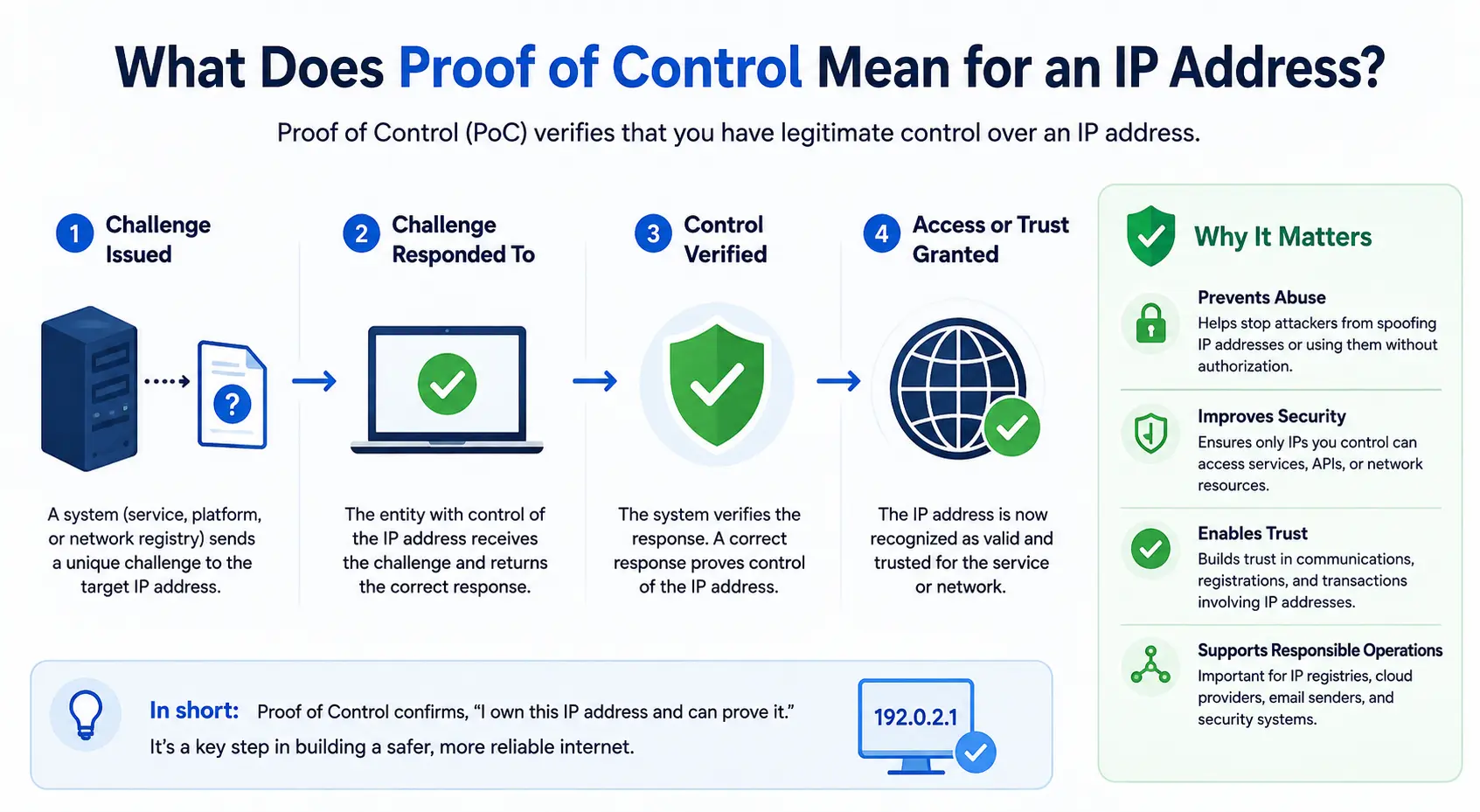
Internet routing depends heavily on trust. Systems such as Internet Routing Registries (IRRs) allow operators to verify which networks are authorised to announce specific IP ranges.
If registry data becomes outdated or compromised:
Malicious actors could hijack IP prefixes more easily
Traffic could be redirected, intercepted, or dropped
Large-scale outages could occur
Academic research has already demonstrated that weaknesses in registry-linked data can enable attackers to “act in full anonymity on behalf of a victim” when exploiting abandoned resources.
In a failure scenario, such vulnerabilities would likely multiply.
Fragmentation of the global Internet
One of the Internet’s defining strengths is its global interoperability. RIRs help maintain this by coordinating policies and ensuring consistency across regions.
If a registry fails:
Regions could develop conflicting allocation policies
Duplicate or overlapping IP assignments could emerge
Cross-border connectivity could degrade
The Internet could begin to fragment into semi-independent networks, undermining the principle of a single, unified global network.
Principle of a single, unified global network.
With IPv4 addresses now a valuable commodity, ownership disputes are already increasing. A registry failure could accelerate this trend dramatically.
Research highlights growing tensions between market-driven allocation and policy-based fairness, even leading to legal challenges that “threaten the very existence of the RIR system.”
In a failure scenario:
Companies may contest ownership of address blocks
Courts could become involved in adjudicating IP rights
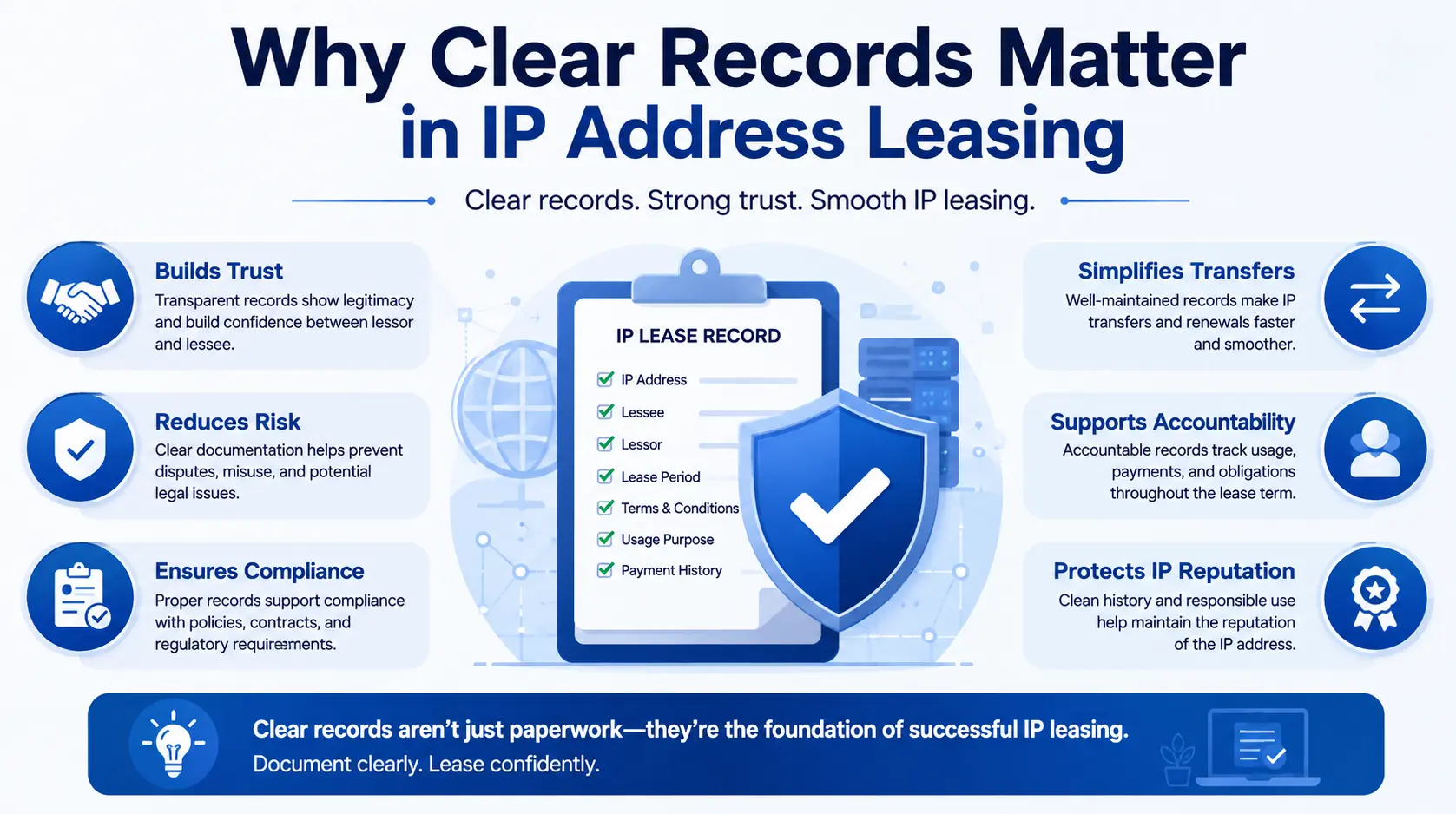
Transfers and leasing markets could become chaotic
Without a trusted authority, enforcing ownership becomes significantly more complex.
Impact on businesses and Internet growth
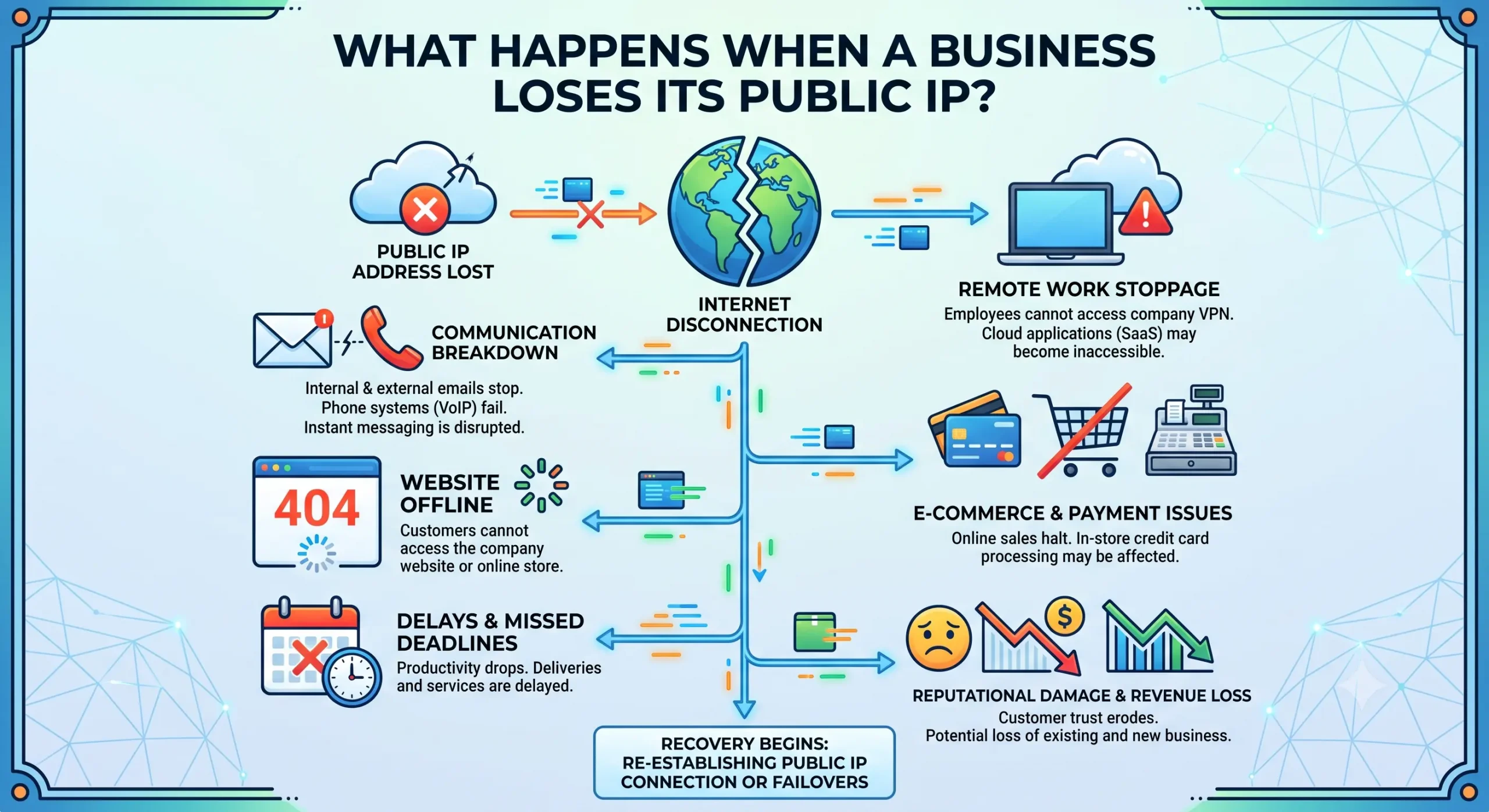
For businesses, especially Internet service providers and cloud platforms, registry failure would create immediate operational challenges:
Difficulty obtaining new IP addresses
Delays in launching services or expanding networks
Increased reliance on workarounds such as NAT (Network Address Translation)
Even today, IPv4 scarcity already limits network growth and complicates scaling.
A registry failure would amplify these constraints, potentially slowing digital transformation in emerging markets.
Could IPv6 reduce the risk?
IPv6, the successor to IPv4, offers a vastly larger address space and is widely seen as the long-term solution.
However, adoption remains uneven. IPv4 and IPv6 must coexist, and many systems still depend heavily on IPv4 infrastructure.
This means:
Registries remain critical even in an IPv6 transition era
Failure risks cannot be eliminated simply by adopting IPv6
Dual-stack complexity may introduce additional vulnerabilities
In short, IPv6 reduces pressure but does not remove systemic dependence on registry governance.
How resilient is the current system?
The registry ecosystem includes accountability mechanisms, community governance, and coordination bodies designed to prevent failure.
These include:
Multi-stakeholder policy development processes
Oversight structures linked to global Internet governance
Collaboration between registries through organisations such as the Number Resource Organization
Such mechanisms aim to ensure continuity and trust, even in the face of disputes or operational challenges.
However, the system ultimately relies on cooperation, legal stability, and institutional integrity—factors that cannot be guaranteed indefinitely.
Why this matters now
The question of registry failure is no longer hypothetical. Increasing legal disputes, economic pressures around IPv4, and geopolitical tensions are putting strain on Internet governance structures.
At the same time:
IPv4 scarcity has turned addresses into high-value assets
Security threats targeting routing infrastructure are rising
The Internet’s governance model faces growing scrutiny
These trends suggest that the resilience of registries is becoming a critical issue for the future of the Internet.
Read more:
Note:45 On the Manufactured Narrative of IPv4 Scarcity
Why IPv4 scarcity isn’t a problem – it’s a market opportunity