Hidden risks of cheap IPv4 blocks in the secondary market
Hidden risks of cheap IPv4 blocks in the secondary market Key points: Low-priced IPv4 blocks often conceal reputational, security […]
Read More
Hidden risks of cheap IPv4 blocks in the secondary market Key points: Low-priced IPv4 blocks often conceal reputational, security […]
Read More
What Is RPKI and Why Does It Matter? Traffic across Internet networks is routed according to […]
Read More
Step-by-Step IP Address Leasing Guide | Process and Considerations for Safely Leasing IPv4 Addresses Lease IP addresses safely—from assessing requirements and choosing a reputable provider to conducting reputation checks and compliance reviews for a smooth deployment. Plan the IP block size and lease term carefully, choose a reliable broker, and review the contract terms closely to clarify all policies. Verify IP reputation, configure the network correctly, monitor usage continuously, and make sure the contract terms are clear to avoid disputes. Why Leasing IP Addresses Safely Matters As IPv4 addresses become increasingly scarce, many organizations choose to lease IP addresses. This gives them the […]
Read More
Will IPv4 prices rise or drop in 2026? Expert predictions Key points• Analysts expect mixed outcomes in 2026, with large-block […]
Read More
Sam Altman | CEO of OpenAI In the fast-moving world of artificial intelligence, one name consistently stands out: Sam Altman. As CEO of OpenAI, Altman is not merely leading a company—he is guiding a transformative journey that is reshaping how people interact with technology. His visionary strategy and commitment to ethical AI development have made OpenAI a beacon in an industry where innovation, disruption, and responsibility coexist. Early Beginnings and a Legacy of Leadership Sam Altman’s path to becoming one of the technology world’s most influential figures began well before OpenAI. Born in St. Louis, Missouri, in 1985, Altman developed an interest in technology at an early age. He studied computer science at Stanford University but left before graduating to enter the world of entrepreneurship. At age 19, Altman co-founded Loopt, a location-based social networking application. Although the app did not become a major success, it showcased his entrepreneurial drive and sharp eye for emerging trends. Loopt was eventually […]
Read More
The 50th Law Co-authored by Robert Greene and 50Cent, The 50th Law is a transformative guide to achieving success through fearlessness. It combines 50Cent’s life experience with Greene’s strategic wisdom to offer readers profound insights into overcoming fear, adapting to challenges, and taking control of their own destiny. In this article, we explore the central lessons of The 50th Law to help you develop a fearless mindset and achieve your personal goals. 1. Fearlessness Is the Ultimate Power The central idea of The 50th Law is that fear is the greatest barrier to success. By overcoming fear, you can act boldly, seize opportunities, and face challenges with confidence. Key takeaways: Recognize and confront your fears directly. Develop a mindset that turns fear into motivation rather than an obstacle. 2. Accept Reality as It Is One of the book’s core principles is complete acceptance of reality. Instead of wishing circumstances were different, work with reality as it is. This mindset enables you to face life’s challenges with clarity and resilience. How to apply it: Assess situations objectively and avoid emotional reactions. Focus on what you can control and act accordingly. 3. Self-Reliance Is Nonnegotiable […]
Read More
What Is NLP (Natural Language Processing)? Natural language processing (NLP) is a branch of artificial intelligence (AI) focused on enabling machines to understand, interpret, and respond to human language in meaningful and useful ways. **Simply put, it acts as a bridge between human language and computers, helping computers better understand and process human communication. What Does NLP Do? NLP teaches computers to: Understand language: for example, the meaning of sentences, phrases, and even slang. Generate responses: such as writing a reply to a message. Analyze language: breaking text down to extract useful information such as sentiment or key topics. Examples of NLP in Everyday Life You interact with NLP (natural language processing) almost every day, perhaps without realizing it. Here are some examples: Virtual assistants: Siri, Alexa, and […]
Read More
Top Challenges IP Brokers Face in the IPv4 Market Internet Service Providers (ISPs) distribute addresses through hierarchical IP address allocations obtained from IANA and Regional Internet Registries (RIRs). The Critical Role of IP Allocation in Large-Scale Networks The Critical Role of IP Allocation in Large-Scale Networks Internet Service Providers (ISPs) are the backbone of Internet infrastructure. They operate vast networks that ensure millions of users can access the global digital ecosystem. One of an ISP’s main responsibilities is managing IP address allocation, a process that is essential because it enables devices to communicate with one another over the Internet. For large […]
Read More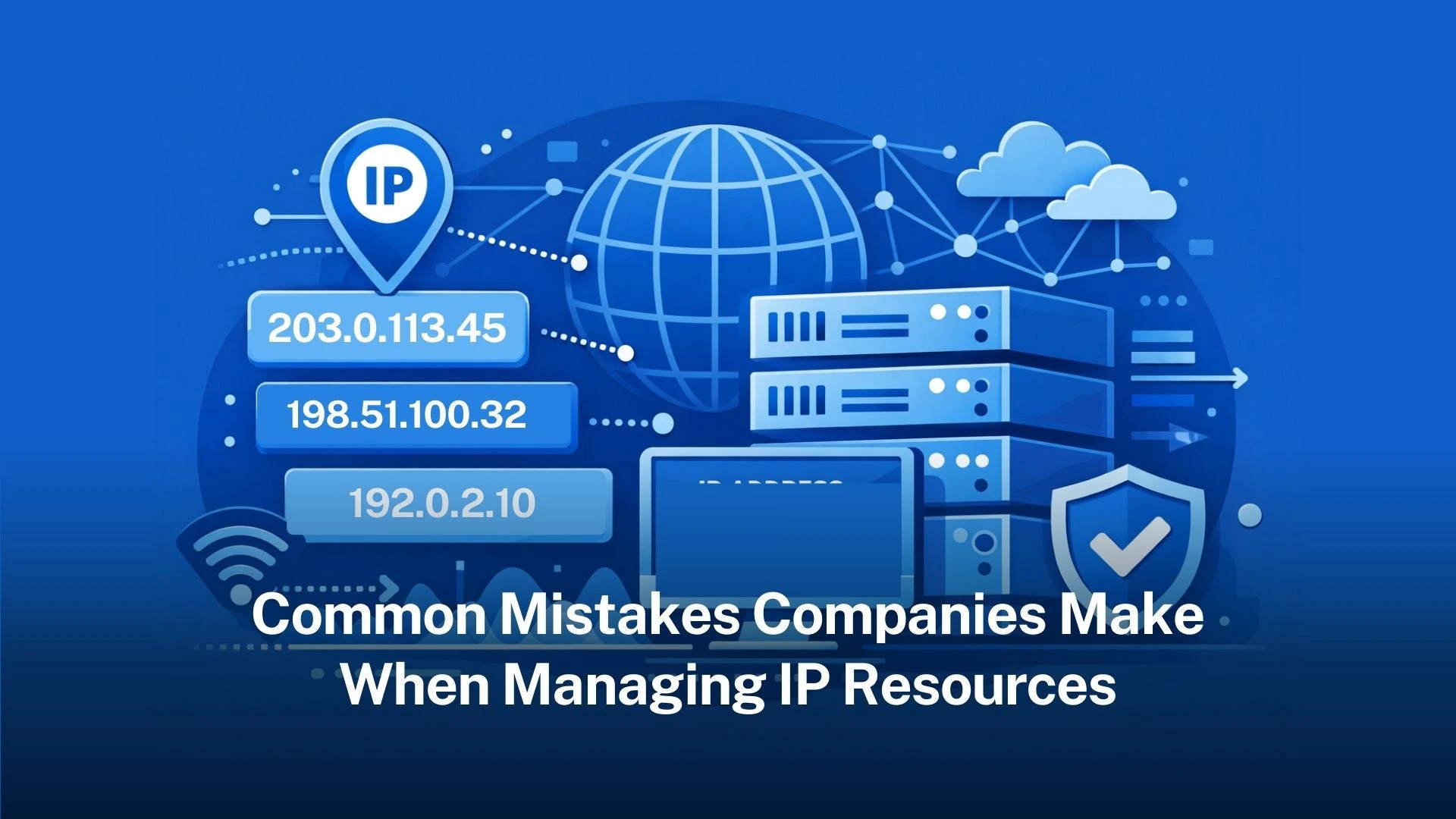
Common mistakes companies make when managing IP resources Many organisations mishandle IP resources — from poor tracking to ignoring IPv6 […]
Read More
Why Civil Society Must Play a Bigger Role in Internet Policy Civil society brings rights-based oversight, local expertise, and accountability to Internet policymaking; governments and industry cannot formulate digital rules on their own. Civil society protects human rights online, scrutinizes governments and platforms, and provides technical, legal, and community expertise. Excluding civil society increases the risks of censorship, shutdowns, and policy bias; inclusive multistakeholder governance can produce more resilient and legitimate rules. Introduction: The Real Harm Caused by Governance Gaps Internet policy is no longer a niche technical issue—it affects electoral integrity, the dissemination of public-health information, economic opportunity, and fundamental rights. Yet policy forums and legislative processes still favor governments and large technology companies, while civil society organizations (CSOs) that represent affected groups, defend rights, and provide grassroots expertise are often marginalized. The result is ineffective policy and greater social harm. What We Mean by Civil Society in Internet Policy In this context, “civil society” includes nongovernmental organizations, digital-rights groups, community networks, academic researchers, trade unions, consumer organizations, journalists, and grassroots movements. These actors turn first-hand experience into policy recommendations, monitor implementation, litigate when rights are violated, and operate user-facing services that test how rules work in practice. Their legitimacy comes from close ties to users and often from deep technical or human-rights expertise. Civil Society Defends Human Rights—and Proves It with Evidence Digital-rights organizations have repeatedly documented harms that are often overlooked: Internet shutdowns, arbitrary takedowns, surveillance abuse, and platforms amplifying disinformation. For example, Access Now and the #KeepItOn coalition tracked record numbers of Internet shutdowns and helped reverse some government orders, showing that advocacy can produce tangible results for users. Activists warn: “Telecommunications and Internet service providers that shut down services on government orders also bear responsibility for human-rights violations.” Technical Knowledge and Community Foundations Civil society organizations are not merely advocates; they often possess specialized technical knowledge, from measuring Internet shutdowns to designing privacy-preserving tools. Evidence from community networks and research groups can counter narrow commercial narratives and demonstrate the real-world effects of policy choices, especially in regions and language communities overlooked by industry models. This bridge between technology and community is essential to credible, enforceable regulation. Why Inclusion Matters: Legitimacy, Durability, and Quality Policymaking without broad participation can be seen as imposed and illegitimate. Inclusive multistakeholder processes—such as the Internet Governance Forum (IGF) model—can build consensus, reveal trade-offs, and reduce the chance that rules will be captured by narrow interests. The United Nations and other international forums have repeatedly stressed that broad participation is essential to building a resilient digital future. Cases in Which Civil Society Changed Policy Outcomes From opposing sweeping platform censorship to promoting rules on service shutdowns, civil society interventions have shaped laws and corporate practices. Civil society’s push for human-rights accountability helped shape European institutions’ Internet-freedom policies and encouraged public debate around instruments such as the Digital Services Act. These interventions show that, when supported and resourced, civil society organizations can change policy and practice. […]
Read More
How CTOs are reducing IT costs through smarter IP lifecycle management This guide provides a systematic overview of IP infrastructure, […]
Read More
How the IP management supports remote work infrastructure Proper IP address management keeps teams connected and secure. It enables scalable […]
Read More