
Why IPv4 continuity depends on more than IP address ownership
Owning IPv4 addresses helps capacity planning, but continuity also depends on routing control, compliance, reputation and resilience.
Key points
IPv4 addresses remain commercially valuable, but possession alone does not guarantee stable long-term connectivity or transfer flexibility.
Strong continuity planning combines ip address ownership, registry hygiene, routing authority, security controls and measured IPv6 adoption.
Buying IPv4 addresses is no longer the whole strategy
For years, many businesses approached IPv4 addresses as a straightforward infrastructure purchase. If a company secured enough address space, future growth seemed covered. That model was logical when free pools were larger, public supply was easier to obtain, and the wider market for transfers had not fully developed.
That environment has changed.
IPv4 scarcity has turned address space into a managed operational resource. Enterprises now buy, lease, transfer and consolidate holdings in ways that would have seemed unusual a decade ago. What matters in 2026 is not simply how many addresses a company controls, but whether those resources can support uninterrupted operations.
That is why continuity depends on more than ip address ownership.
Owning a block may provide capacity. It does not automatically provide routing certainty, clean registry records, abuse-free reputation, or legal clarity during mergers and restructurings.
For hosting firms, telecom providers, cloud operators, financial institutions and growing digital businesses, those gaps can become expensive quickly.
Why IPv4 addresses still matter
The long-term direction of the internet remains IPv6, yet IPv4 addresses still underpin large parts of global commerce.
Many applications, devices, enterprise systems and customer networks continue to rely on IPv4 compatibility. Dual-stack deployments have expanded, but migration is uneven across regions and industries. As a result, organisations still need IPv4 capacity for customer onboarding, NAT pools, public services, security infrastructure and legacy workloads.
The Internet Assigned Numbers Authority exhausted its central IPv4 pool in 2011, and regional registries have since relied on waiting lists, recovered space and transfer markets.
That scarcity has given address space measurable commercial value. Yet value alone should not be confused with continuity.
IP address ownership is only one layer of control
The phrase ip address ownership is widely used, but in practice the concept is more nuanced.
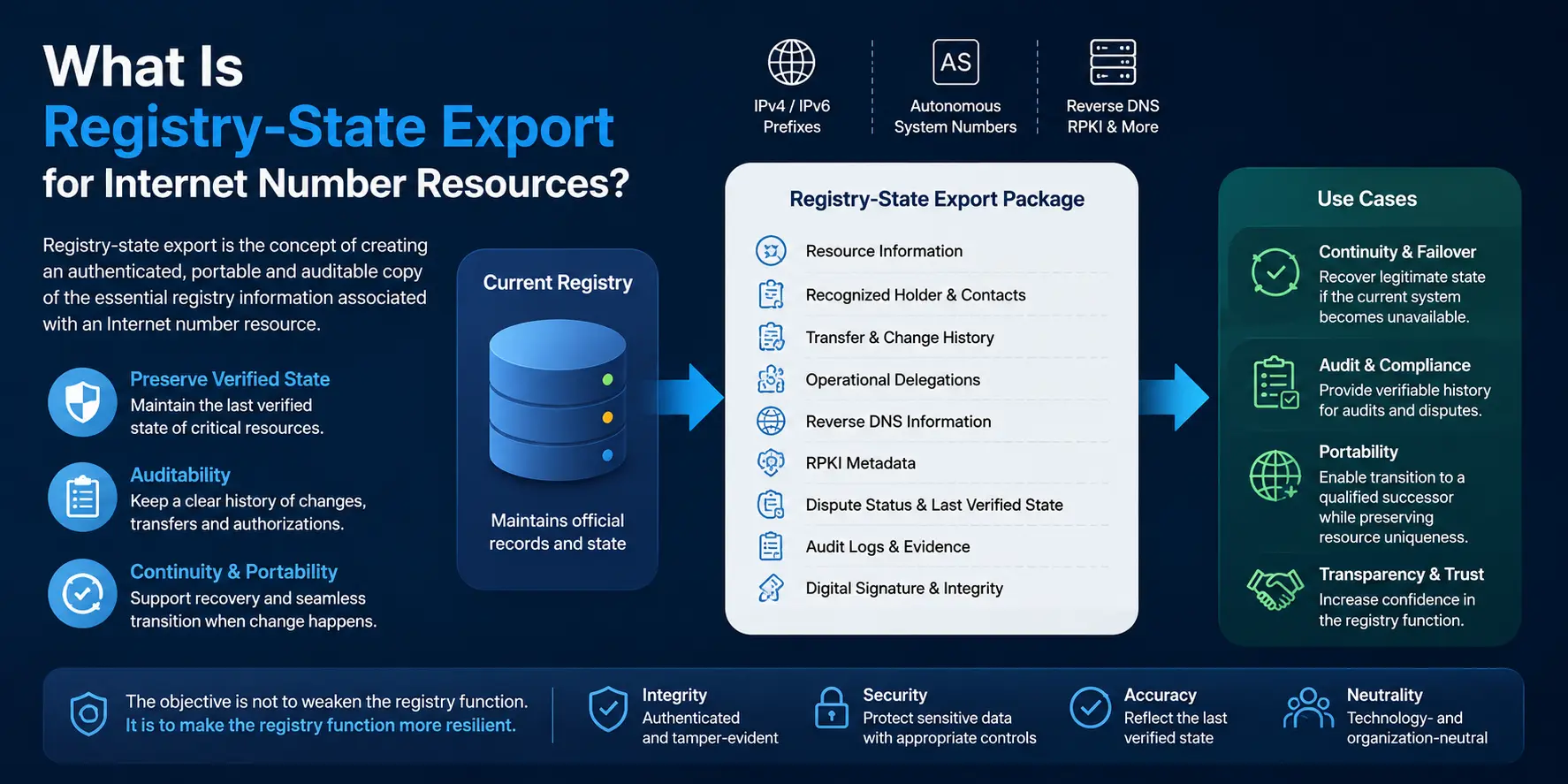
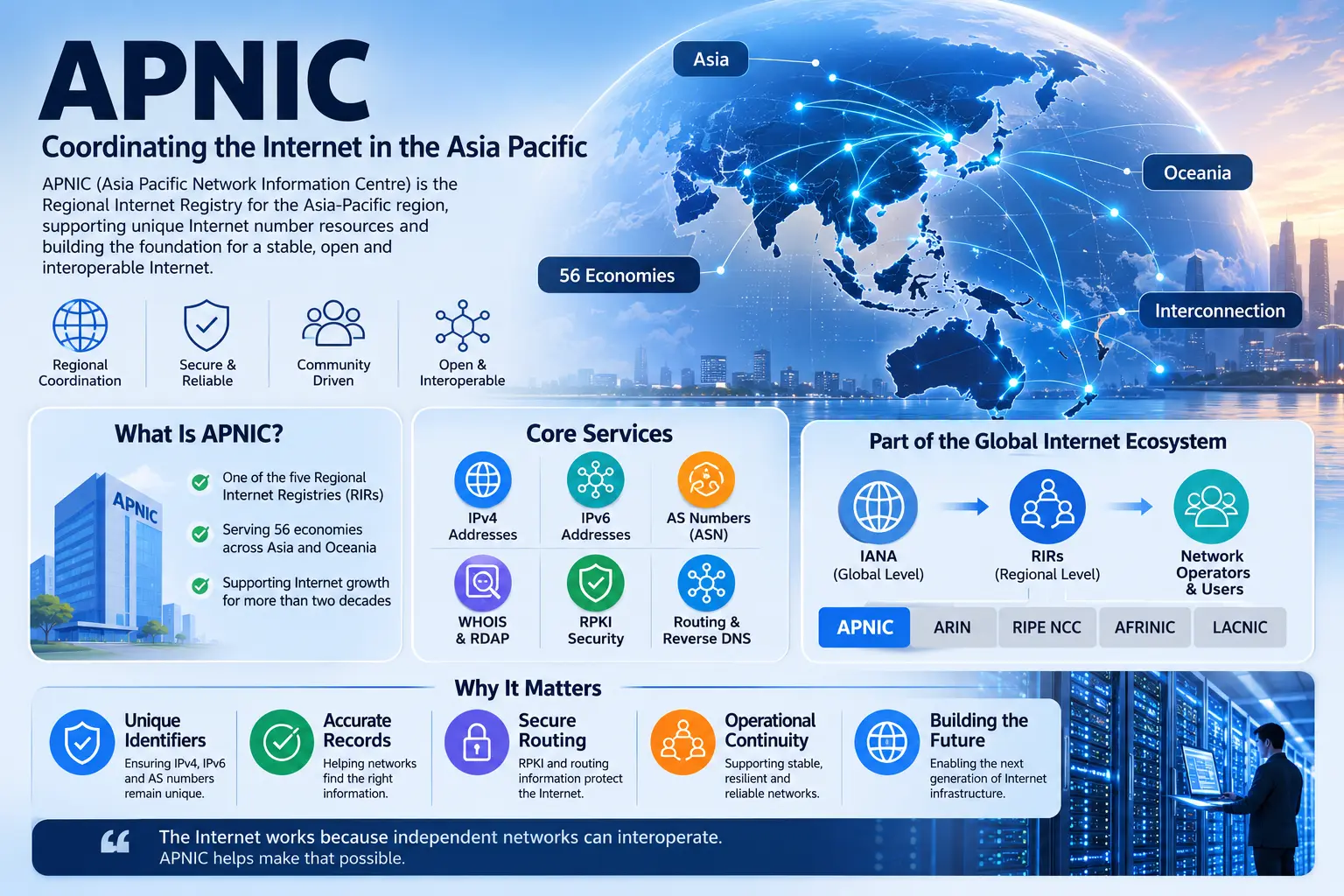
Internet number resources are administered through Regional Internet Registries (RIRs), including ARIN, RIPE NCC and APNIC. These bodies manage allocation and transfer policies rather than issuing classic freehold property titles.
That means control often rests on several overlapping factors:
Registry recognition
Contractual transfer rights
Accurate holder records
Operational routing authority
Jurisdictional legal treatment
Internal governance controls
A company may have paid for a block of IPv4 addresses, but if records are outdated or authority is disputed, practical use can become harder than expected.
For boards and investors, this distinction matters during acquisitions, carve-outs, insolvencies or cross-border restructurings.
Registry hygiene is an overlooked continuity risk
Many continuity failures begin with administration rather than engineering.
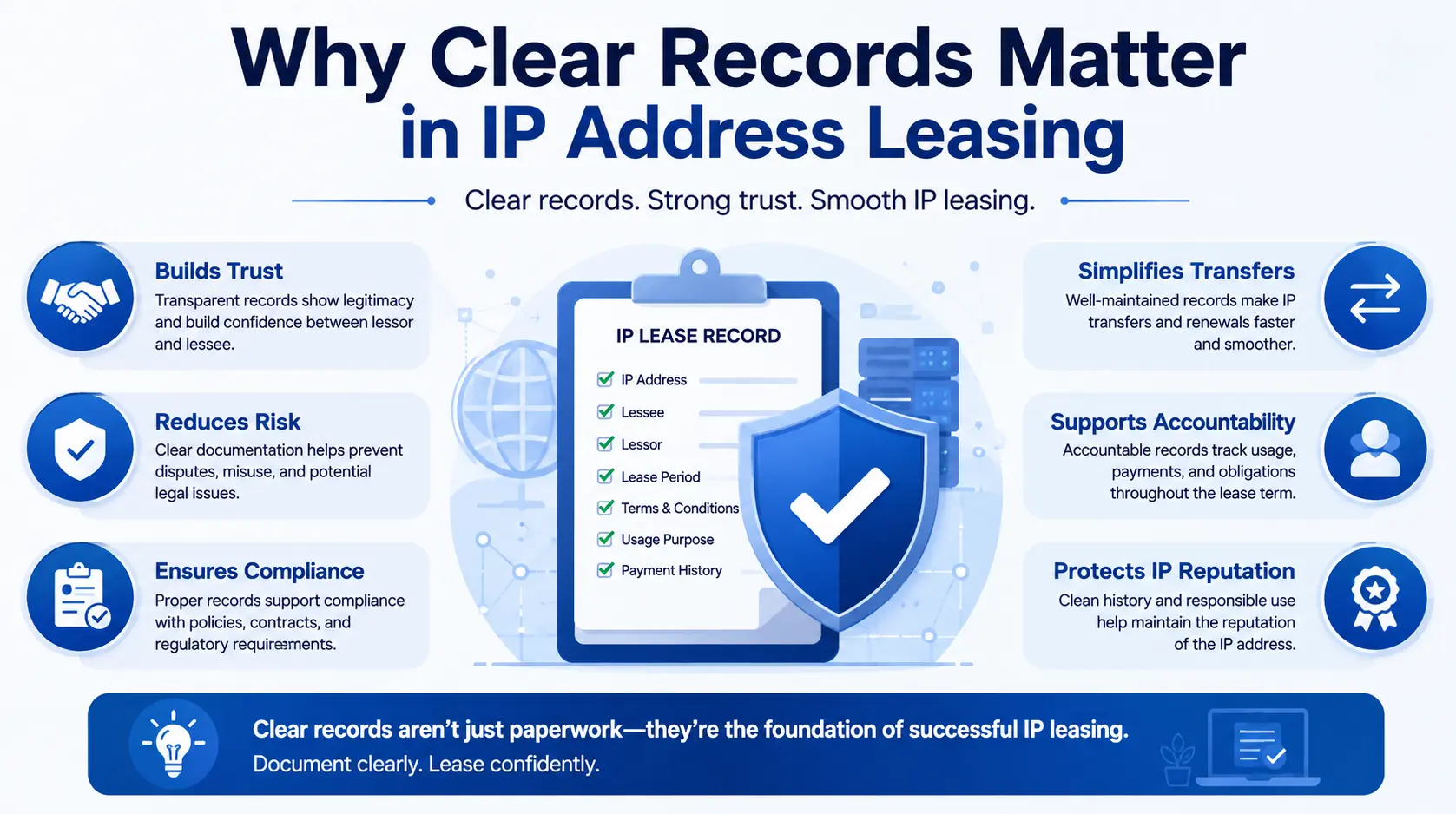
Across the transfer market, transactions can slow when legacy holder names are outdated, authorised contacts have left the business, or merger histories are poorly documented. Industry brokers regularly note that clean documentation is one of the biggest determinants of transaction speed.
This creates a common hidden risk: businesses assume owned address space is ready to deploy, only to discover the paper trail is incomplete.
Best practice includes:
Confirming the registered legal entity
Updating administrative and abuse contacts
Maintaining historic transfer documents
Recording internal authority controls
Reviewing address utilisation annually
Strong ip address ownership is as much about paperwork discipline as technical control.
Routing authority keeps IPv4 addresses usable
A block of addresses only creates value when it can be routed cleanly across the internet.
That means network operators need:
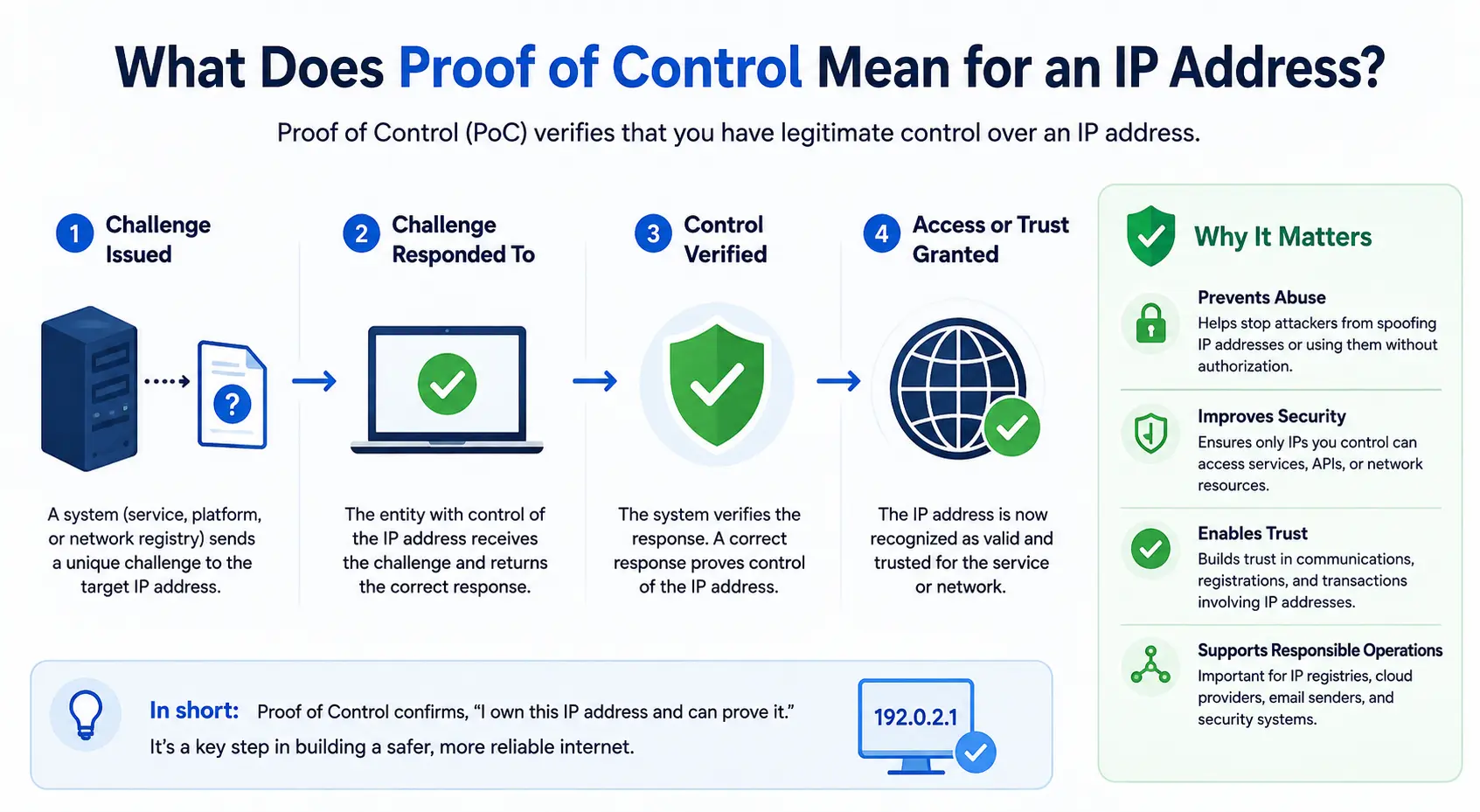
Correct BGP origination authority
Accurate IRR route objects
Valid RPKI records where applicable
Upstream acceptance
Change control during migrations
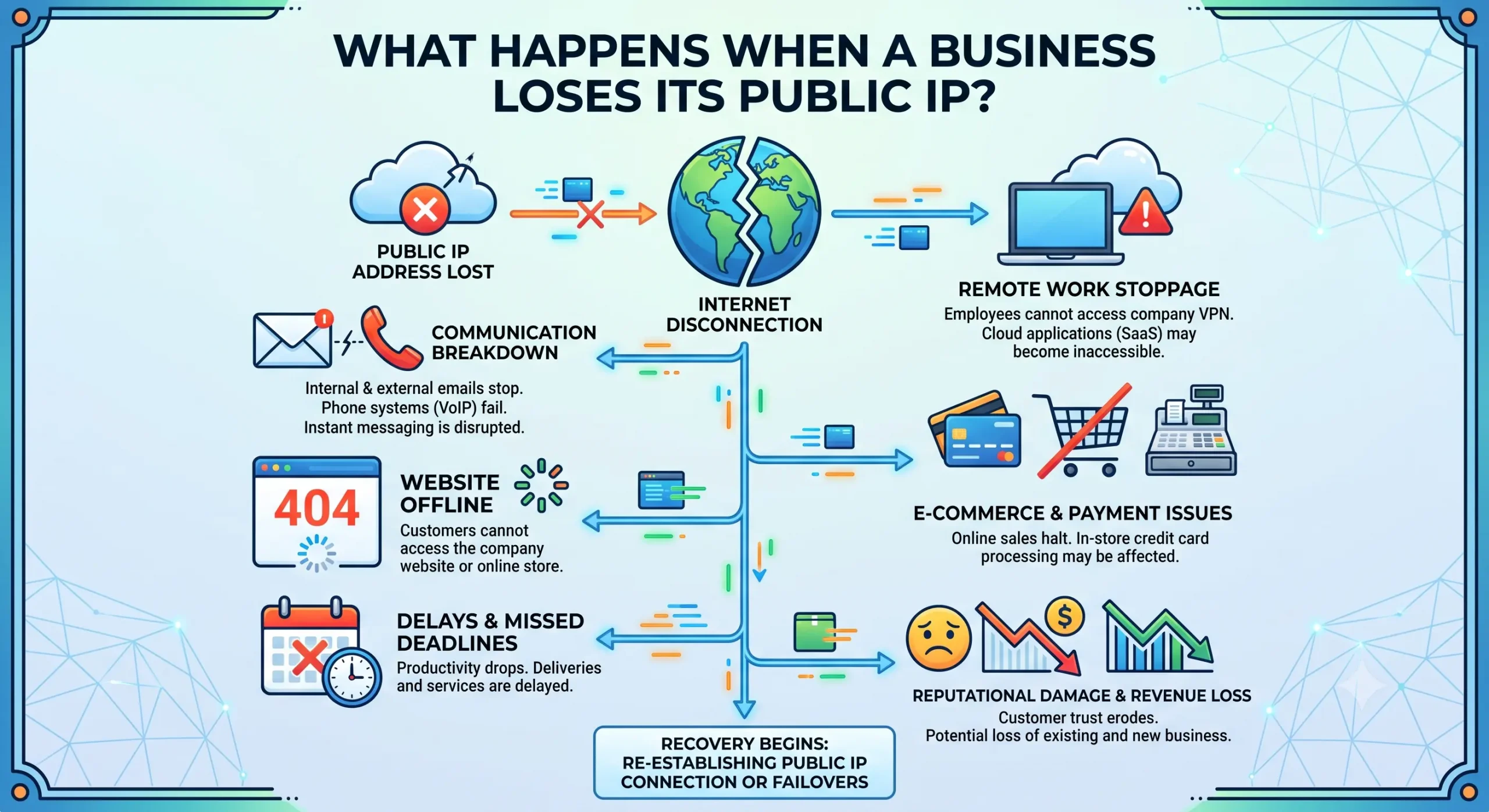
If these elements are neglected, organisations may own IPv4 addresses yet still face outages, rejected announcements or delayed deployment.
This issue has become more important as routing security standards mature. Cloudflare and other major operators have repeatedly encouraged wider use of RPKI to reduce hijacks and mis-origination risks.
In commercial terms, routing governance protects the utility of the asset.
Reputation can be worth more than the address block itself
Not all IPv4 addresses are equal.
Two similar-sized blocks may carry different real-world value depending on historical usage. If addresses were previously linked to spam, malware hosting or abusive traffic, they may face filtering or reputational friction long after ownership changes.
That can affect:
Email deliverability
Hosting trust scores
Fraud controls
Ad-tech performance
Customer onboarding speed
Experienced buyers often review historic abuse data and blacklist exposure before completing transactions.
This is one reason headline price-per-address figures can be misleading. Clean, well-managed space may be materially more useful than numerically identical space with a poor history.
Leasing versus buying: the continuity question
The debate around whether to lease or buy IPv4 addresses is often framed too simply.
Buying can offer:
Long-term certainty
Strategic reserves
Reduced renewal dependency
Balance-sheet control
Leasing can offer:
Lower upfront cost
Faster scaling
Greater flexibility
Easier response to uncertain demand
The right answer depends on operational profile rather than ideology.
A fast-growing platform with unpredictable demand may prefer leased elasticity. A mature network with stable requirements may prefer owned reserves. Many businesses now use a blended model.
The key continuity question is not ownership versus rental. It is whether capacity remains dependable under multiple scenarios.
IPv6 is still the long-term answer
None of this changes the strategic destination.
APNIC, RIPE NCC and other industry bodies continue to promote IPv6 deployment as the sustainable response to IPv4 scarcity.
Businesses that rely heavily on IPv4 should therefore run two agendas simultaneously:
Protect present continuity
Reduce future dependence
That means reclaiming unused address space, improving NAT efficiency, enabling IPv6 in customer systems, and ensuring new products are built with dual-stack or IPv6-first capability.
A practical IPv4 continuity framework
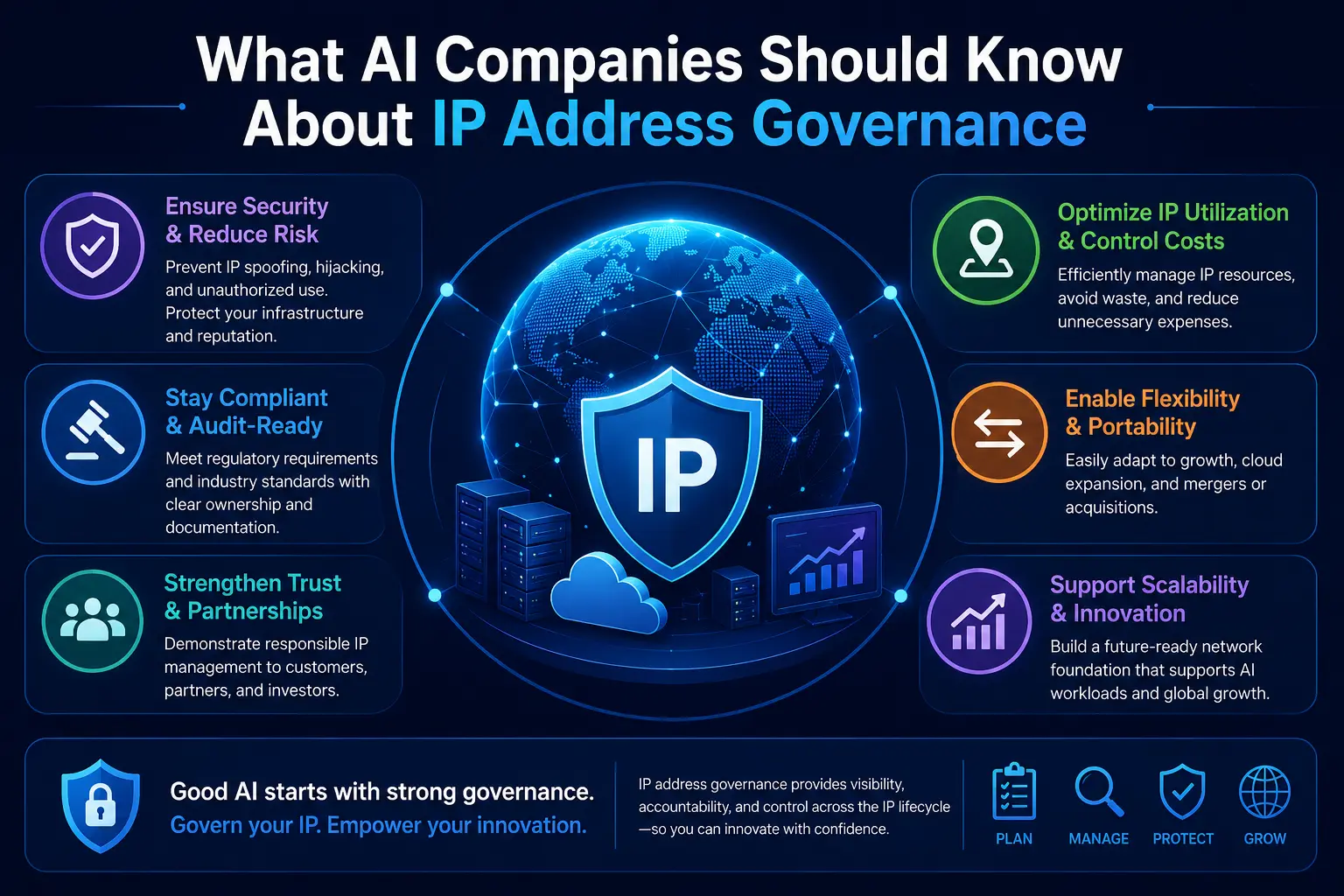
Leaders should treat ip address ownership as one pillar of a broader continuity framework.
1. Asset visibility
Know every prefix, utilisation level, contract and entity owner.
2. Registry readiness
Ensure holder details and documentation are current.
3. Routing resilience
Maintain IRR, RPKI and upstream relationships.
4. Reputation monitoring
Track abuse feeds and remediation performance.
5. Commercial flexibility
Balance owned and leased supply.
6. IPv6 transition planning
Reduce structural exposure over time.
Businesses that manage these six areas typically face fewer surprises.
The bottom line
Owning IPv4 addresses can be strategically sensible. In some sectors, it remains a competitive advantage. But continuity is created by systems, not by possession alone.
A company that combines clear records, sound routing governance, clean reputation, commercial flexibility and gradual IPv6 migration is usually better positioned than one that simply accumulates address space.
In 2026, ip address ownership still matters. It is just no longer enough by itself.
FAQs
It depends on budget, growth certainty and long-term operational needs. Many firms use both models.