Note:22 On Wealth, Scarcity, and Why This "IP Is Capital" Moment Matters
CEO of LARUS Limited and founder of the LARUS Foundation. He works at the intersection of Internet infrastructure, IP address markets, and global Internet governance, drawing on direct involvement across all five Regional Internet Registries. These notes aim to clarify how number resources are governed in practice and advance a more accountable, resilient framework for critical IP assets.
I am often labeled as “commercial,” as if commerce were a flaw rather than a description of how the world actually works. That label avoids the harder discussion: centralized resource distribution has never worked in human history. Every system that attempted to allocate value from the center—land, labor, food, capital—failed for the same reason. Humans are self-interested. Incentives cannot be legislated away. When people are prevented from acting in their own economic interest, efficiency collapses and wealth concentrates in power structures instead of spreading through society.
Decentralized systems succeed for the opposite reason. When individuals pursue profit in open markets, coordination emerges naturally. Prices form, scarcity becomes visible, capital flows to where it is valued most, and total wealth increases. This is not ideology; it is historical evidence. Free markets do not depend on good intentions. They work because they align selfish behavior with collective wealth creation. The Internet itself scaled globally for exactly this reason.
IPv4 did not follow this logic. It was centrally distributed, morally framed, and intentionally underpriced. Scarcity existed, but it was denied. The result was an industry that remained structurally poor despite holding valuable assets. Networks were trained to treat IPv4 as infrastructure, not capital, and that decision suppressed wealth across the entire ecosystem.
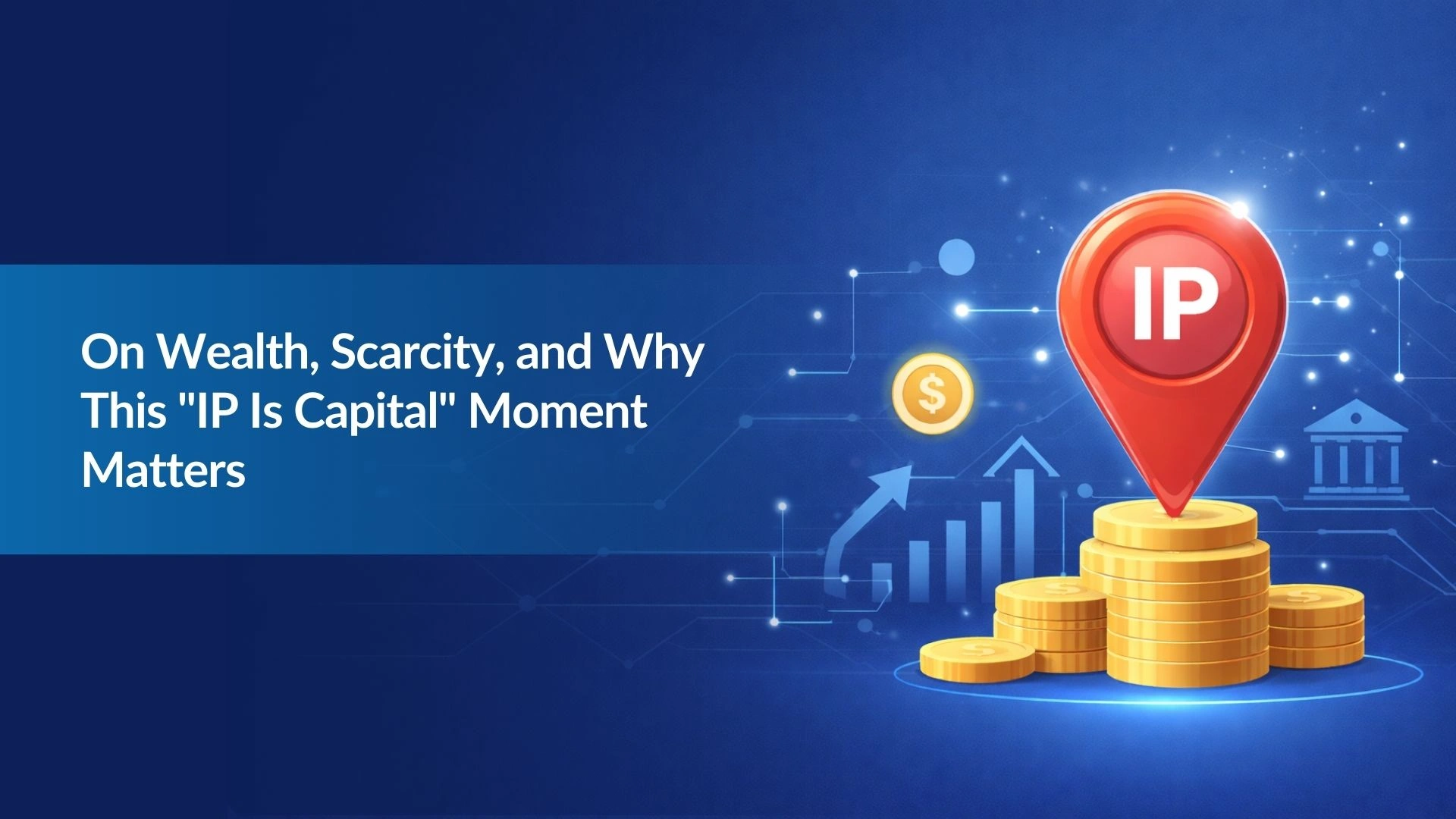
What exists now is the first true opportunity this industry has ever had. Not a cycle, not a repeatable event, but a singular moment created by history. Once missed, it will never appear again. Pricing scarcity turns dormant assets into capital, and capital is what allows networks to accumulate power, independence, and long-term resilience.
This is why ISPs should support the “IP is Capital” movement. Not out of ideology or alignment, but out of rational self-interest. This is the only chance in a generation for networks to get rich from what they already own. To stop surviving on margins and start compounding wealth.
Yes, I embrace the free market. Not because it is kind, but because it works. Not because it is fair, but because it creates wealth at scale. And yes, I am a capitalist—openly and deliberately—because capitalism is how this industry finally stops being poor.